A Paris Exhibition: A Day in an 18th-Century Parisian Private Mansion

expo hôtel particulier 18eme siècle exhibition

When I heard that the MAD was dedicating an exhibition to the eighteenth century, and more specifically to a single day in a Parisian hôtel particulier, I didn’t hesitate for long. The exhibition, A Day in an 18th-Century Parisian Private Mansion, ticked absolutely every box: a period I find endlessly inspiring, a certain French art de vivre, and of course, decoration. I was so enthusiastic that I was ready to go two Saturdays in a row… before the official opening, having misread the dates each time! This time, I finally made it. And I have to admit, the experience left me slightly wanting more. Perhaps my expectations were too high, but I know I wasn’t the only one to feel that subtle sense of frustration.

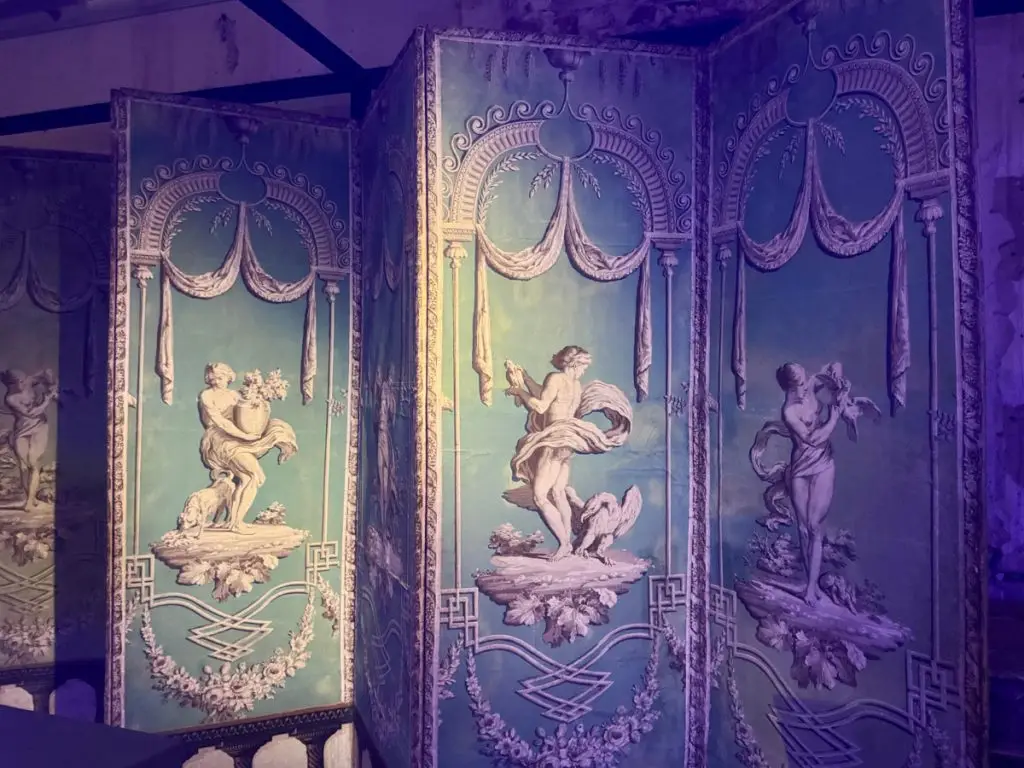
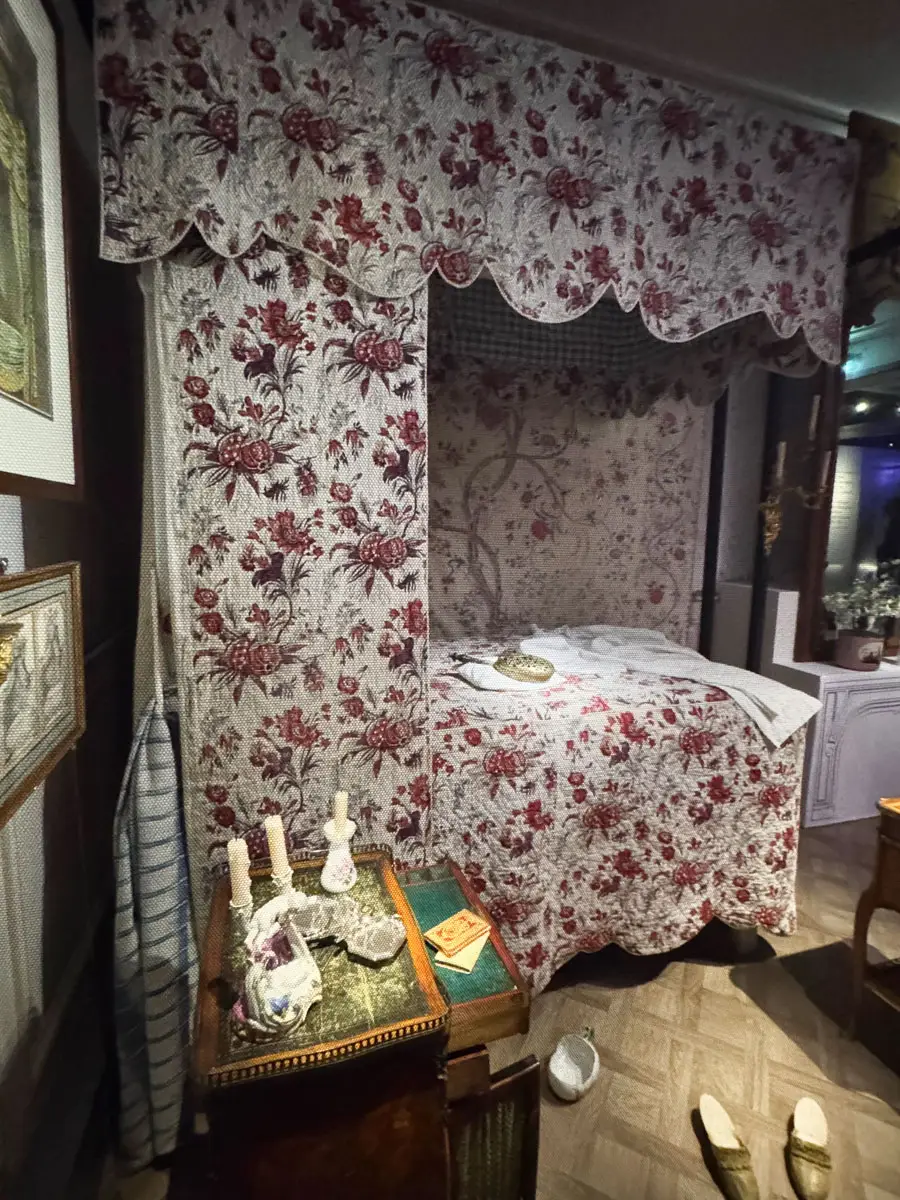
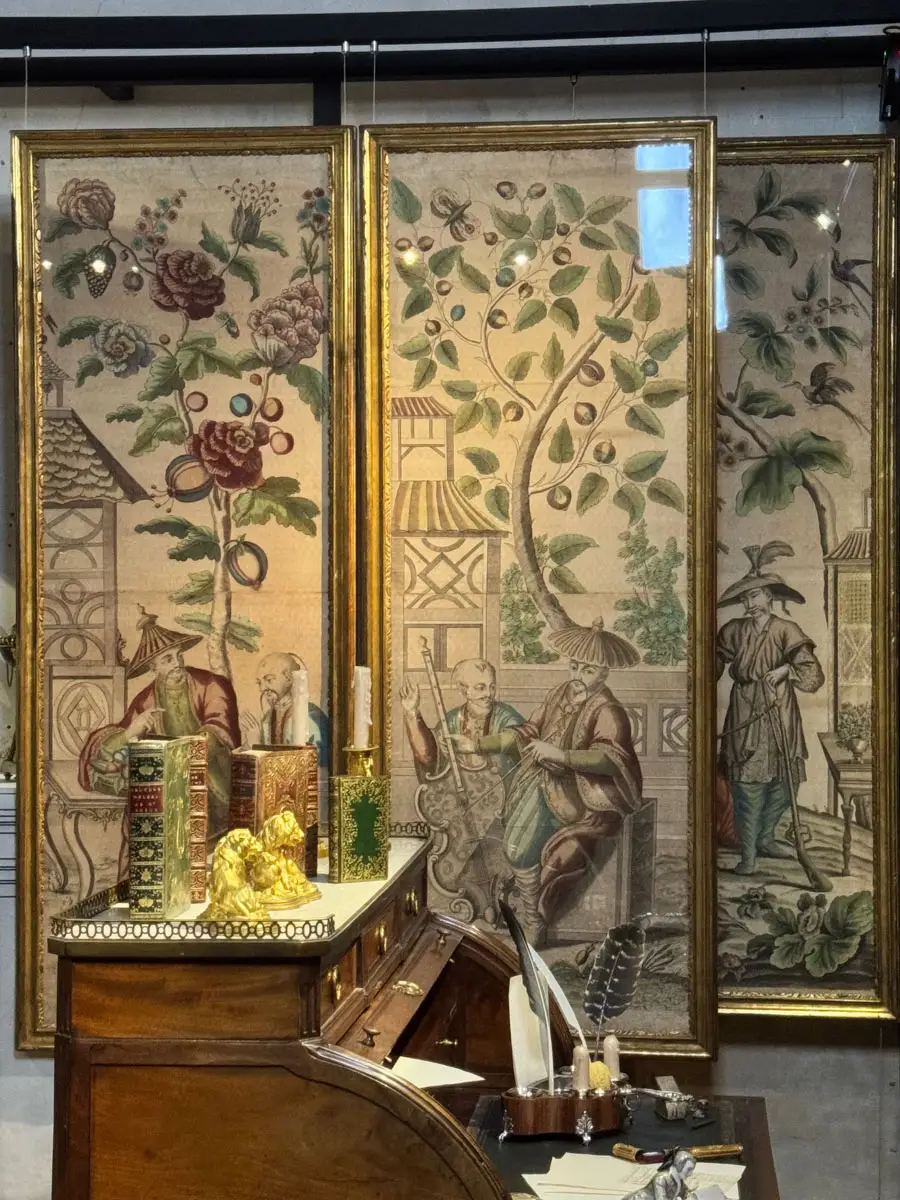
The premise of the exhibition is undeniably appealing: to tell the story of life in a private mansion over the course of a single day. You move from the morning bedchamber to the study, from the garden to the salon, to the dining room… the route unfolds around the household’s daily rituals and uses. You begin to understand how spaces shaped both social and domestic life, how architecture carefully distinguished between reception and intimacy, and how each room answered to a specific set of codified gestures. The idea of considering the house as a living, inhabited space structured by time, habits, and ceremony, is a compelling one.

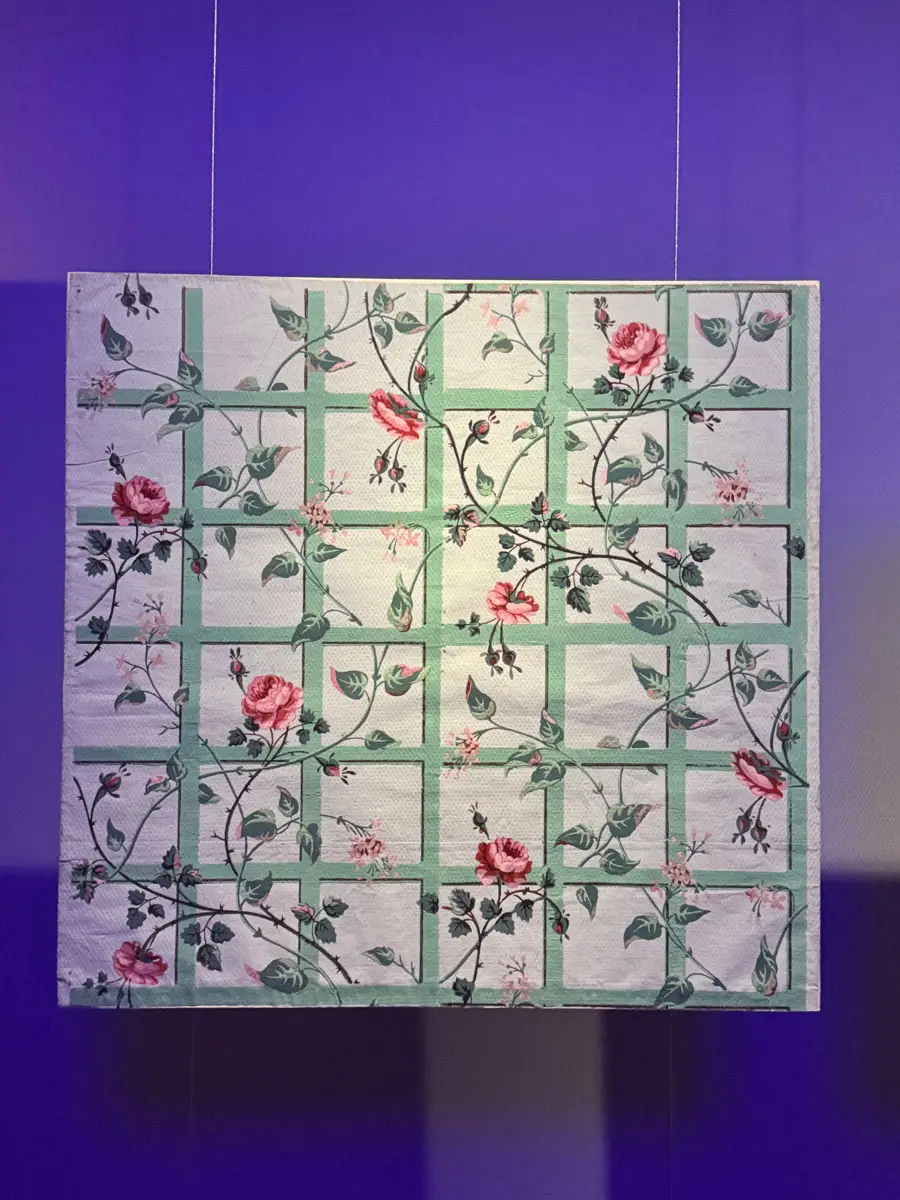
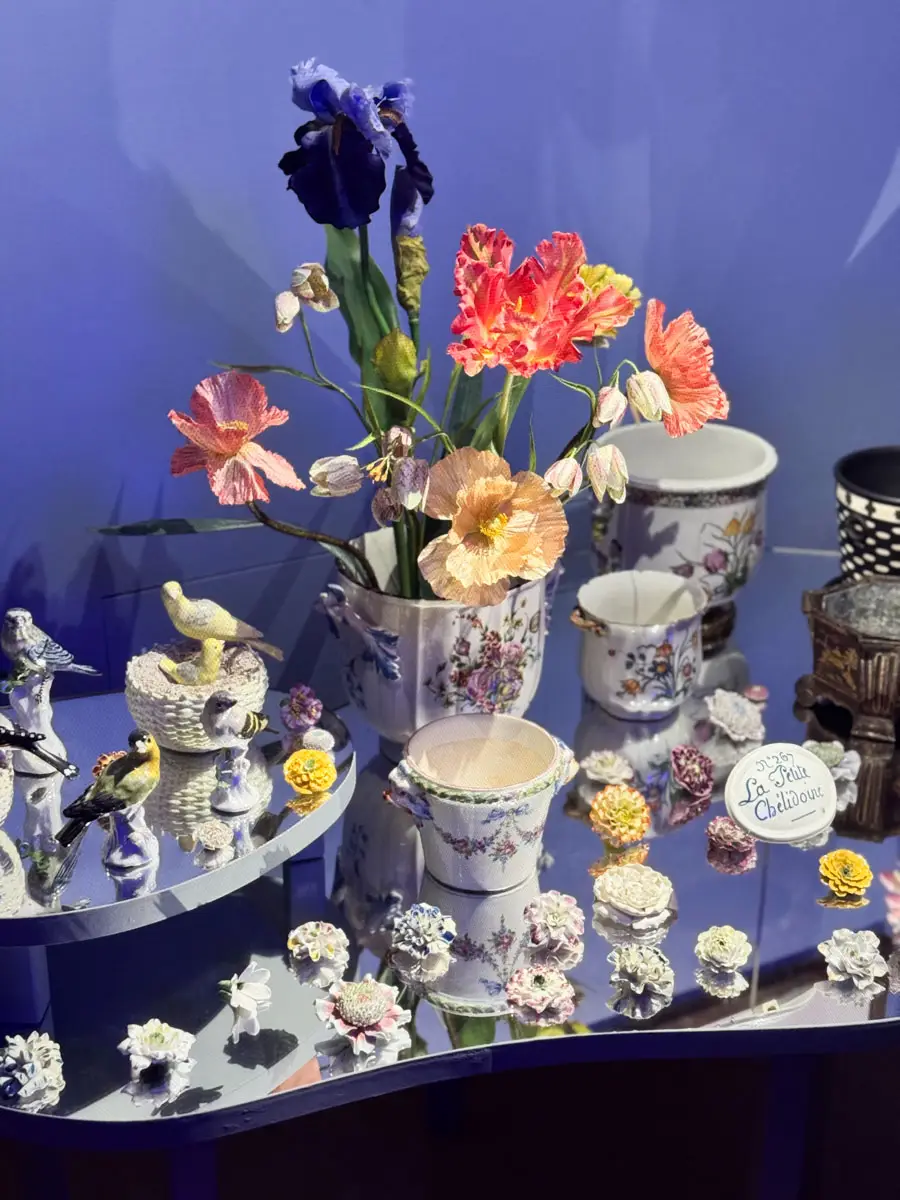
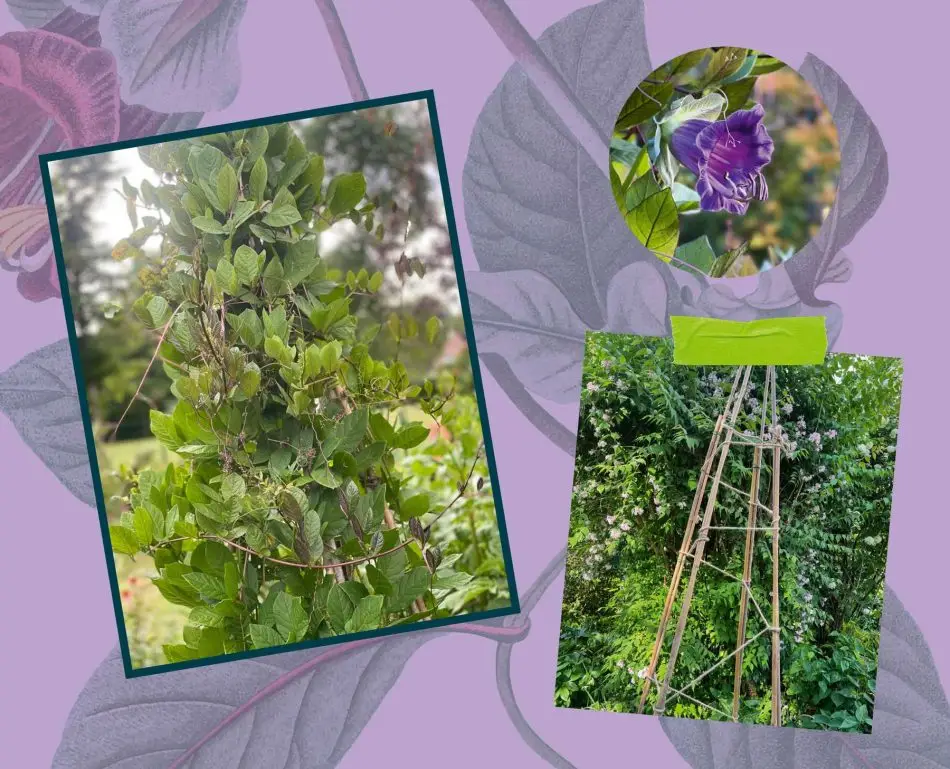
I particularly appreciated the section devoted to the garden, though it felt far too brief. It reminds us how owning a garden in the heart of the city was a privilege and almost a symbolic extension of the home itself. Trellises, orderly plantings, promenading paths: everything contributed to that delicate balance between retreat and sociability. The garden was not merely decorative; it was a place to receive guests, to be seen, to assert one’s taste. I would have loved for this theme to be explored more fully, as it’s a subject I’m especially fond of.

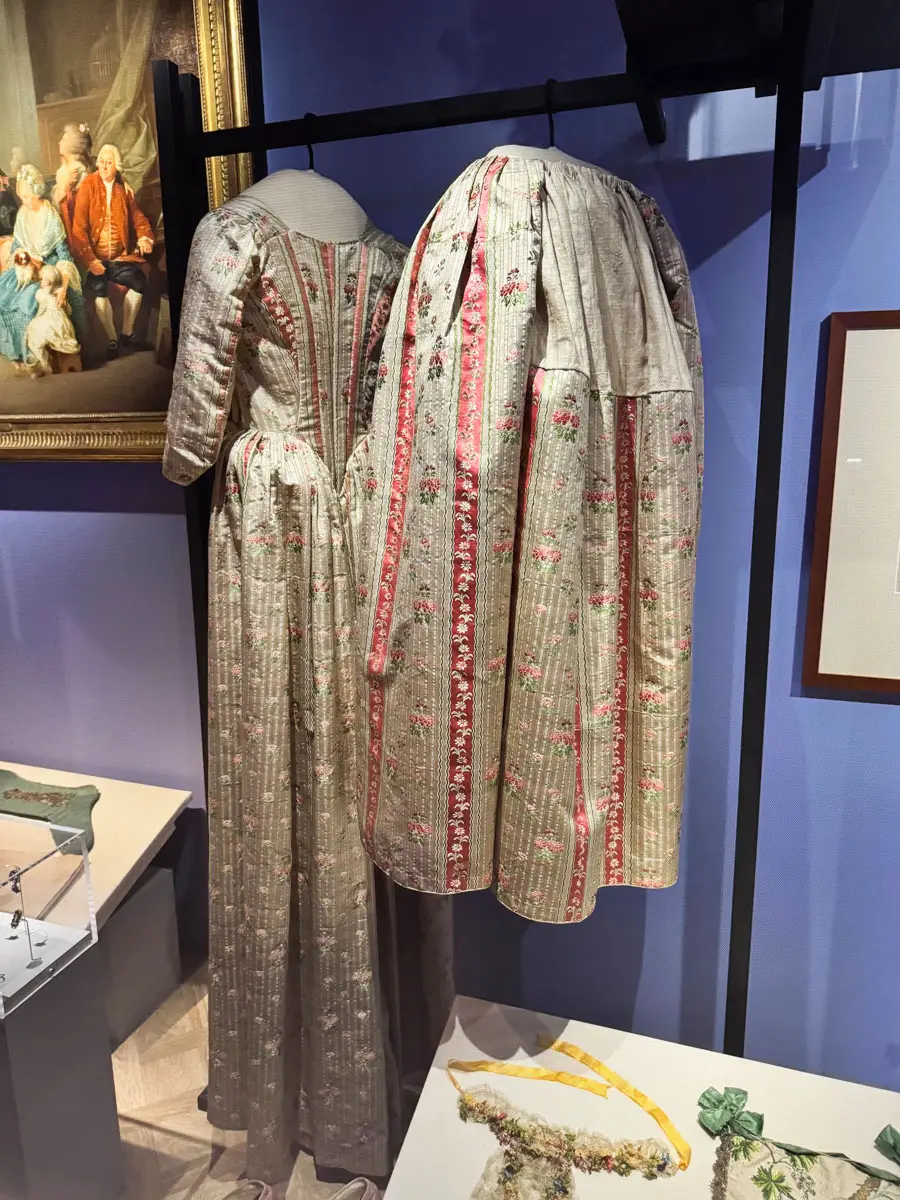
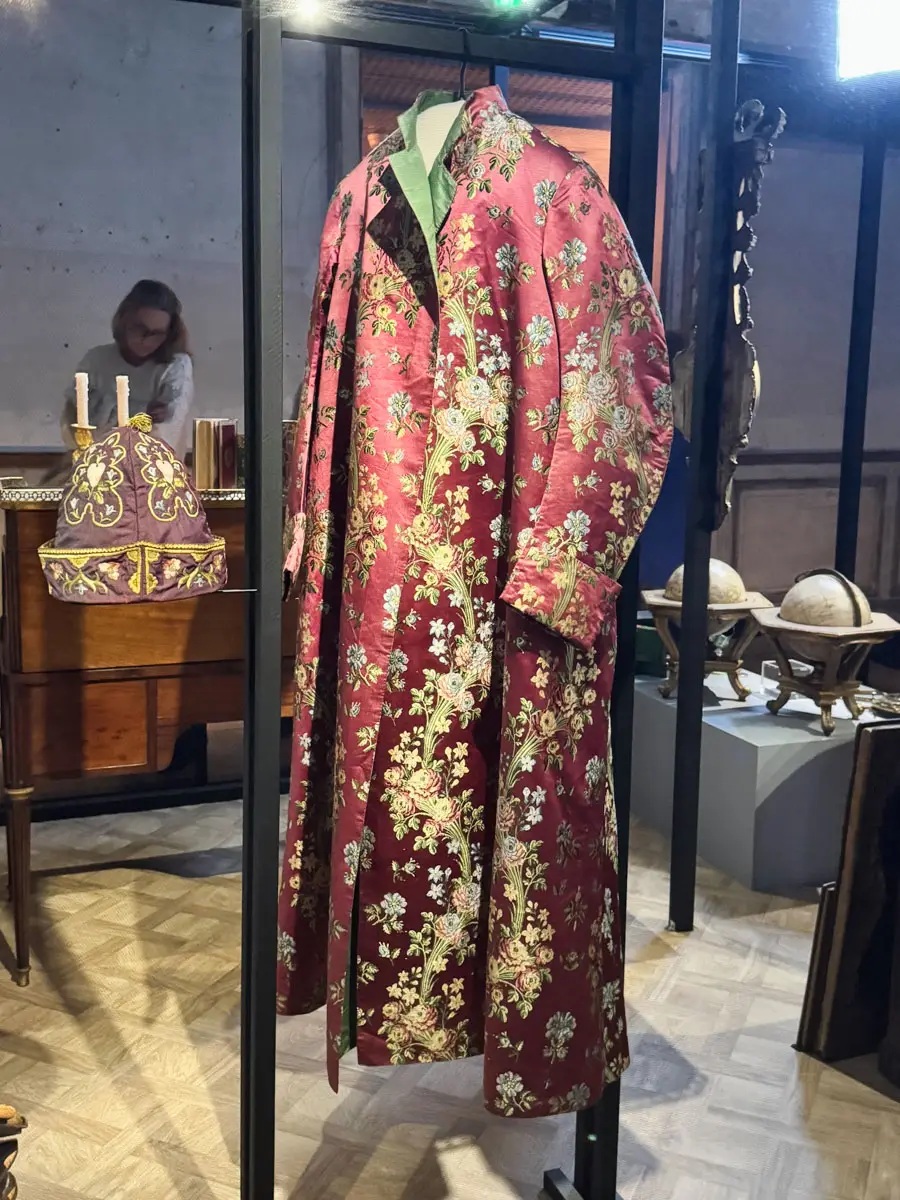
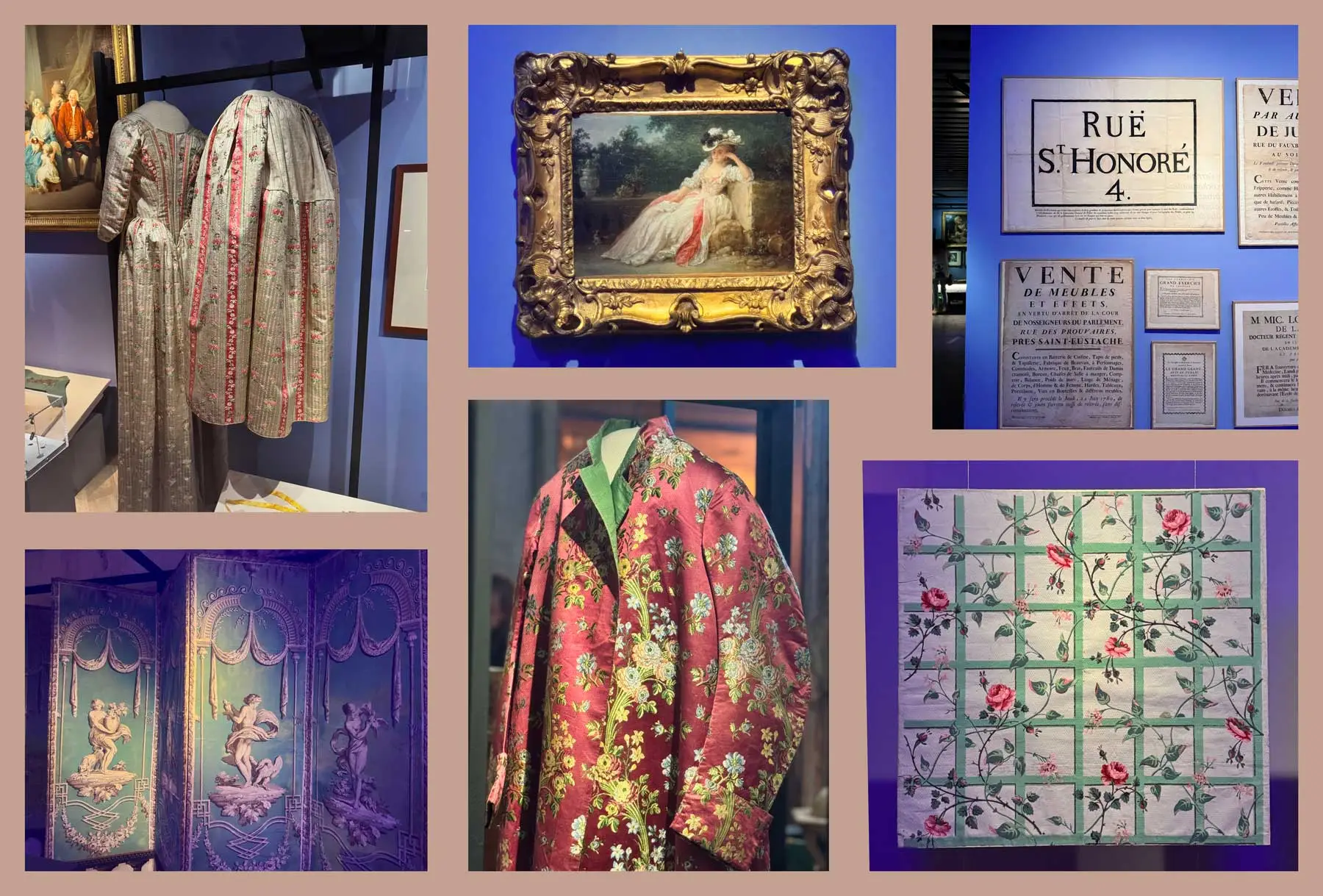
I was also expecting to see more textiles. There are a few silks, two interesting dresses, and an absolutely superb men’s silk satin banyan, but overall the selection remains limited. For a period in which fabric was so central (in dress as much as in interiors) I had hoped to encounter a richer variety of materials and patterns, particularly printed cottons such as toile de Jouy, whose manufacture was established during this time.
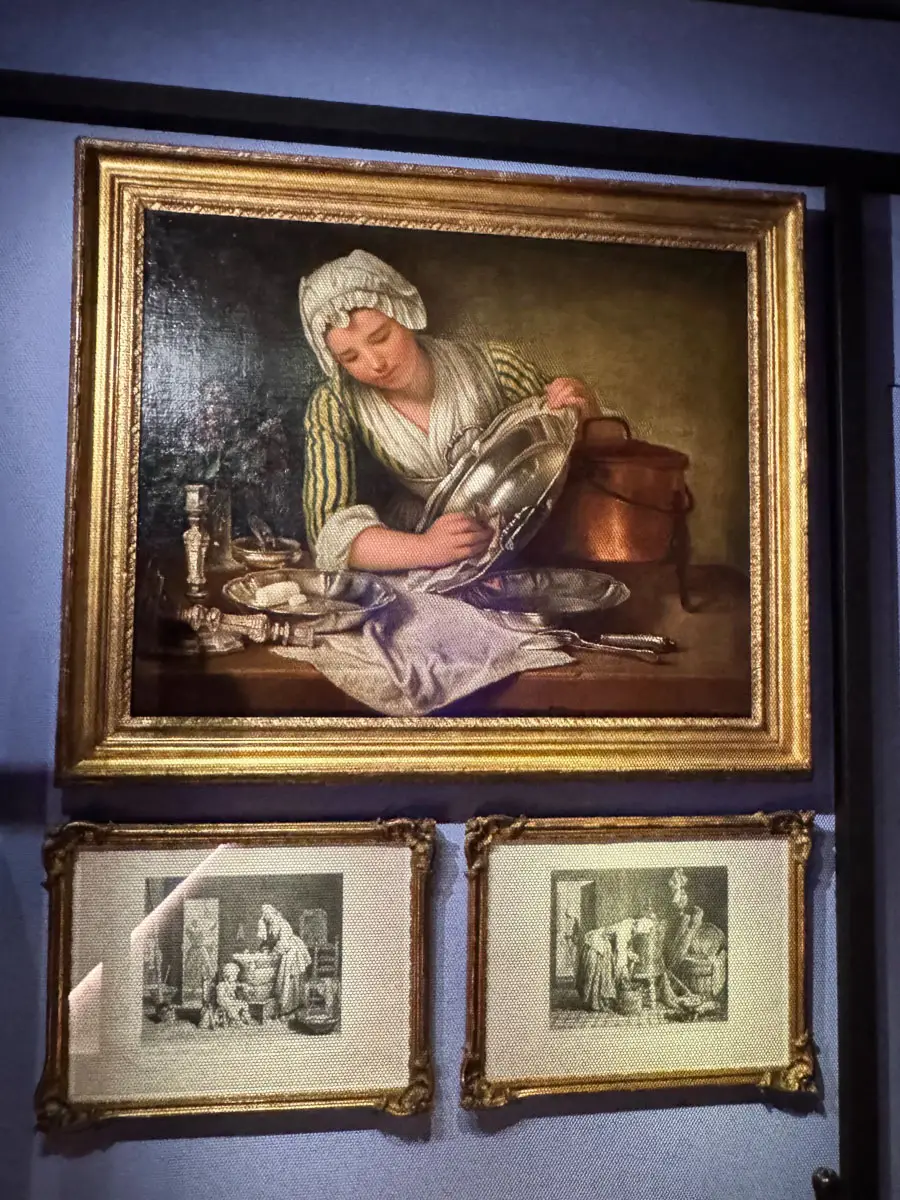
I felt much the same about the art of the table. The reconstructed dining room and the silver pieces evoke the ritualisation of meals, service à la française, the growing adoption of certain practices (such as the use of individual cutlery in high society), and the theatrical staging of both dishes and guests. I would have liked to see more elaborate table settings and a broader range of tableware. The art of entertaining in the eighteenth century is a world unto itself and perhaps deserved a deeper treatment, though I can understand that spatial constraints may have made this difficult.

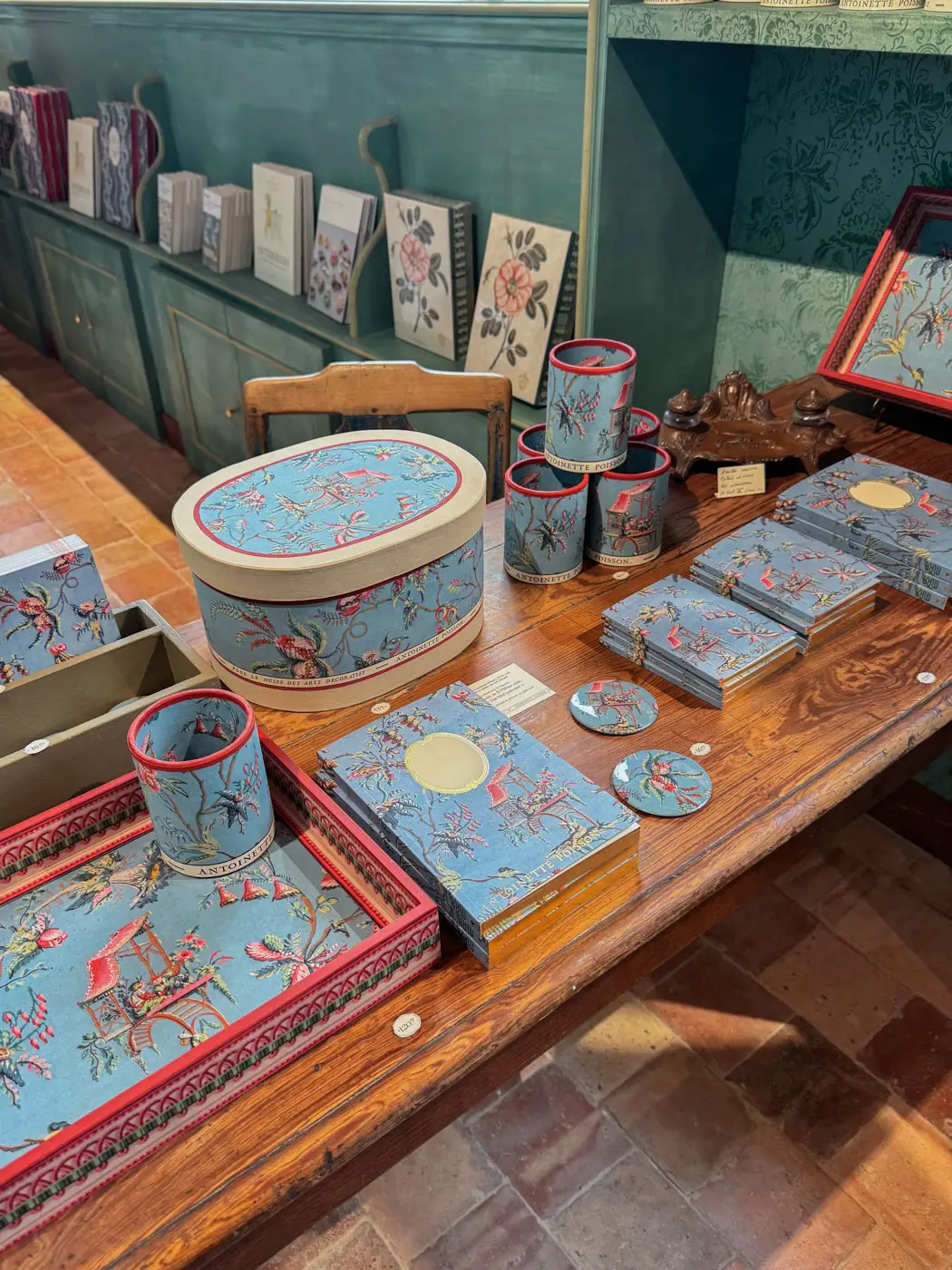
More generally, many fascinating themes are touched upon (domestic service, intimacy, the rituals of rising, salon music, leisure) yet each is only lightly sketched rather than explored in depth. Of course, the exhibition presents itself as a kind of “snapshot” of a typical day, so it cannot cover everything. But in barely an hour, one skims across a period of extraordinary richness and complexity rather quickly. Similarly, the brand Antoinette Poisson has used an archive from the museum (in collaboration with the MAD) to create a small collection based on a very beautiful motif, yet this is not mentioned at all within the exhibition itself and only appears in the museum shop. That is perfectly fine… but where is the coherence? Especially since the motif in question, La Pagode from the Dussere manufactory, was one of the most beautiful designs I saw that day.

That said, the exhibition does succeed in placing objects back into their context (I was particularly fond of the small weekly planners and almanacs) and in showing that behind the aesthetics of the eighteenth century lies a highly structured organisation of daily life. It offers a clearer understanding of how people occupied, inhabited, and entertained within these spaces; patterns that continue to influence our interiors today. Perhaps it is precisely because the subject is so rich that one cannot help but wish to see even more.

At the Musée des Arts Décoratifs in Paris from February 18 to July 5, 2026

Partagez cet article