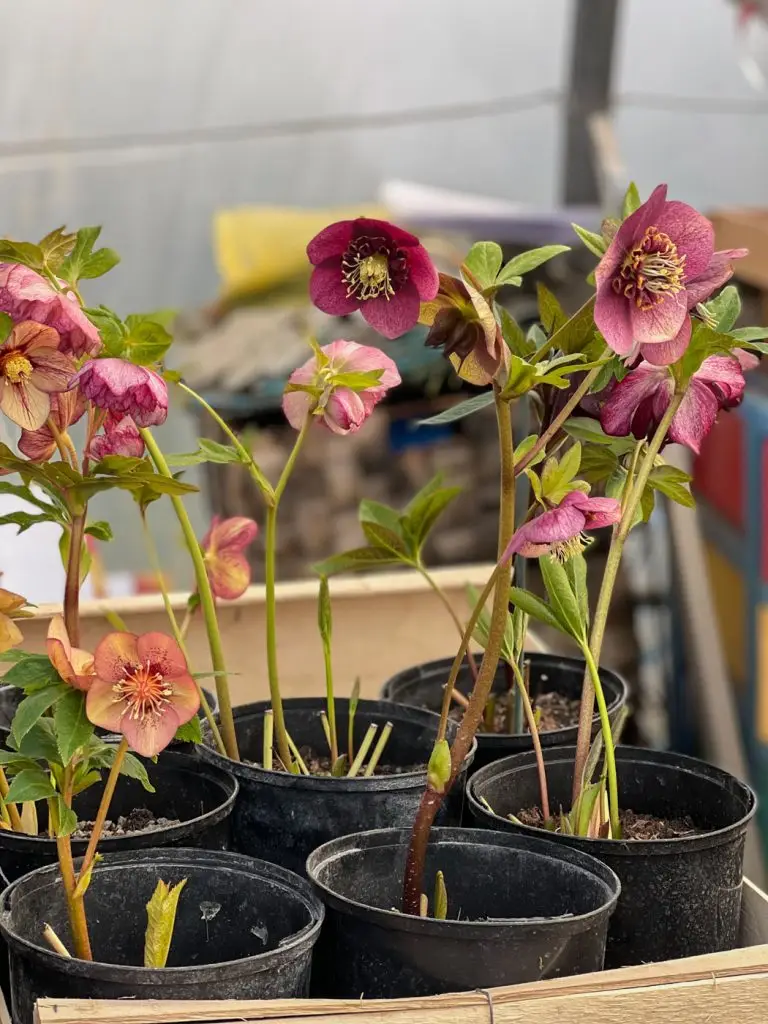
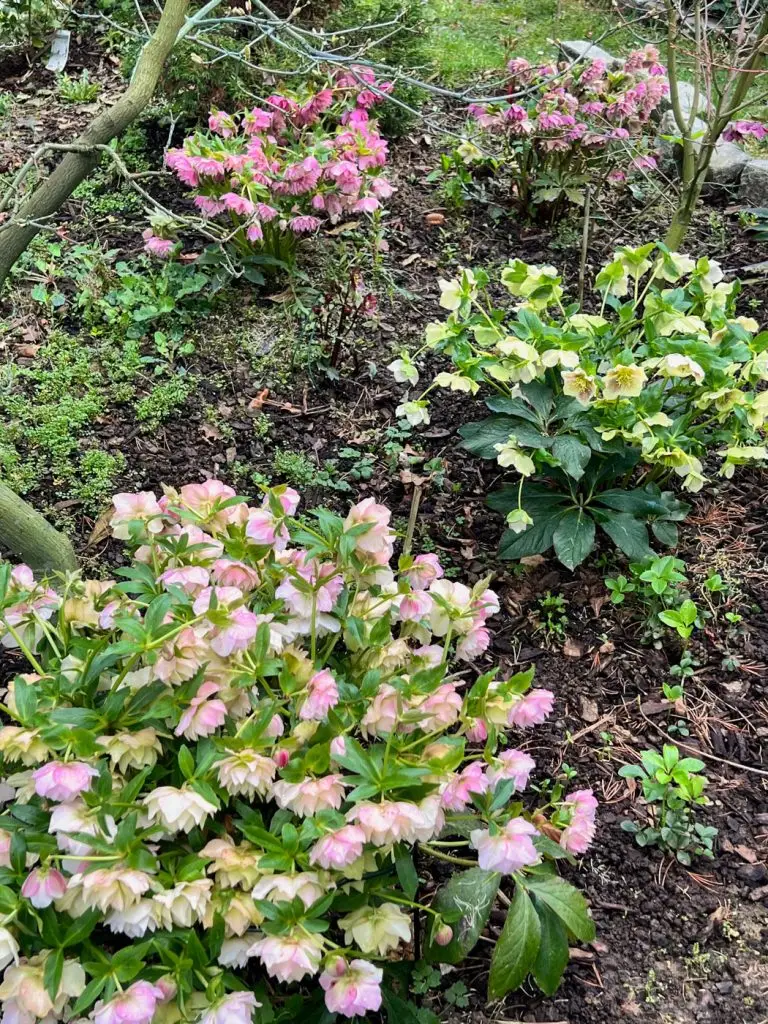
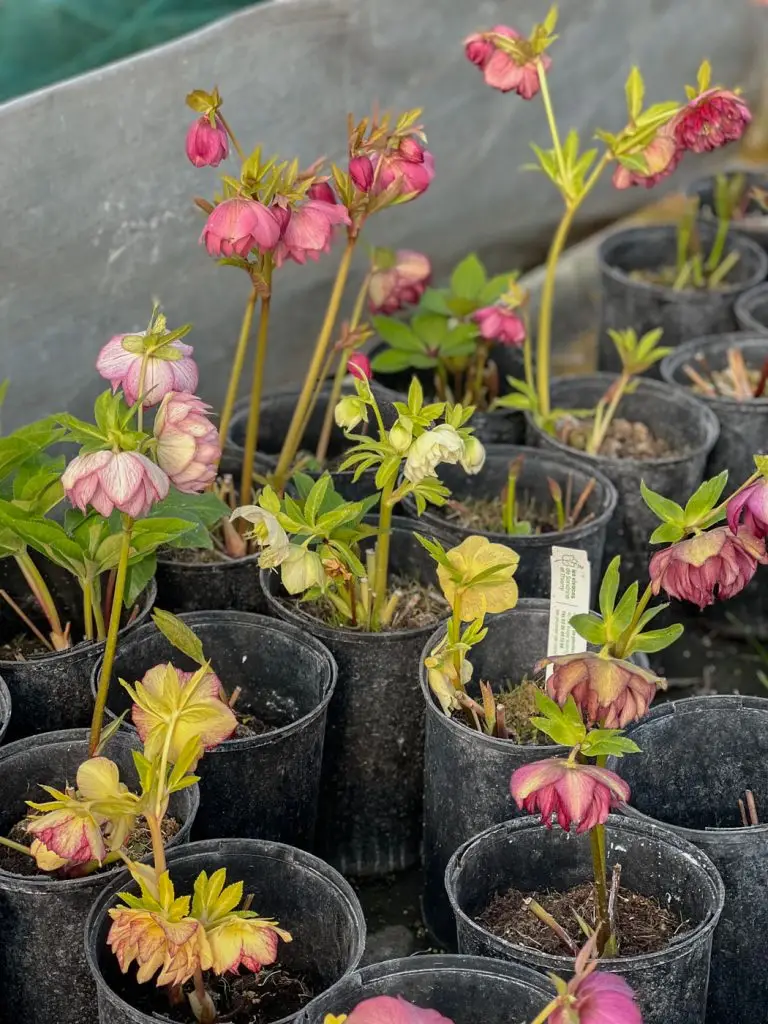
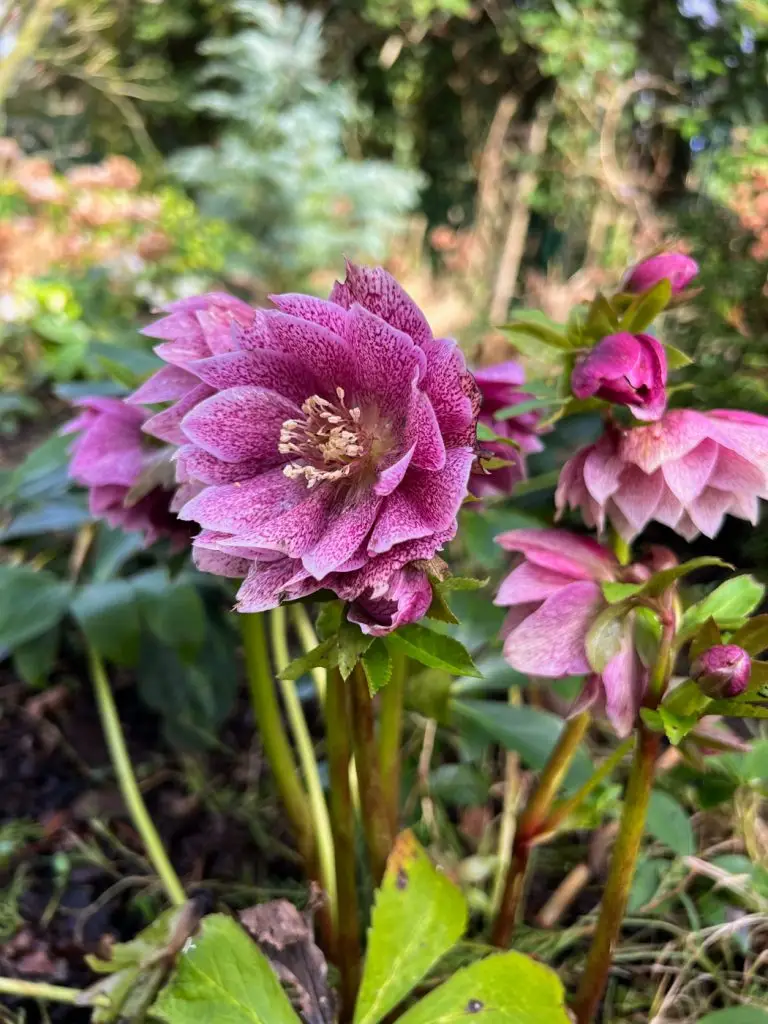
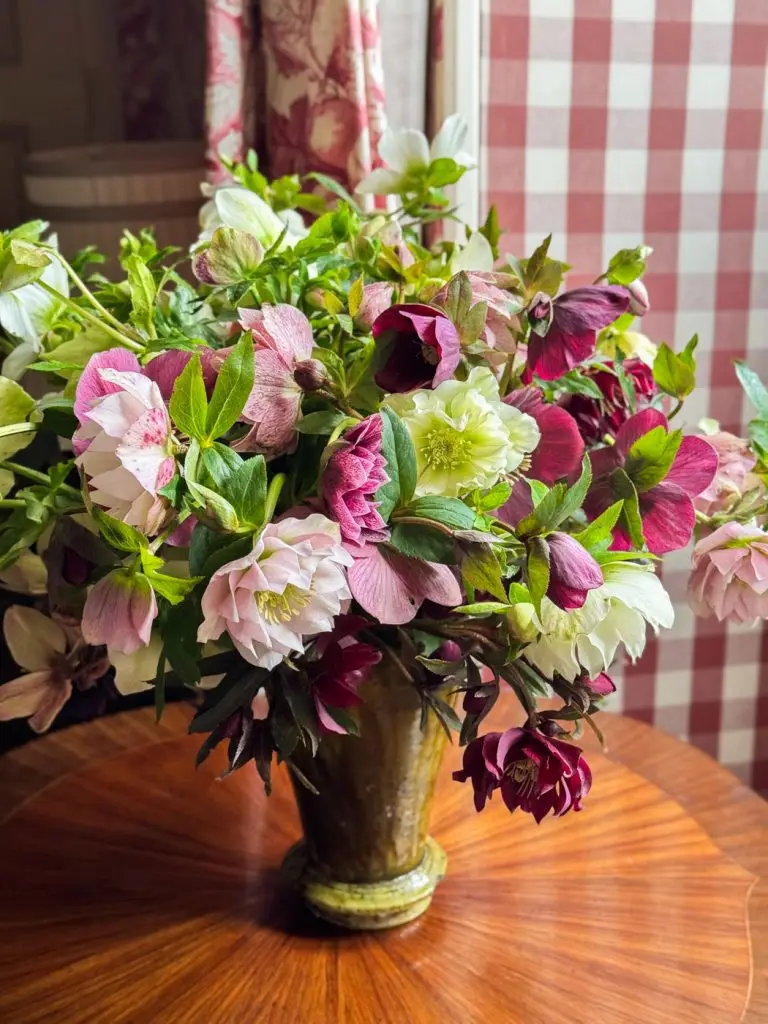
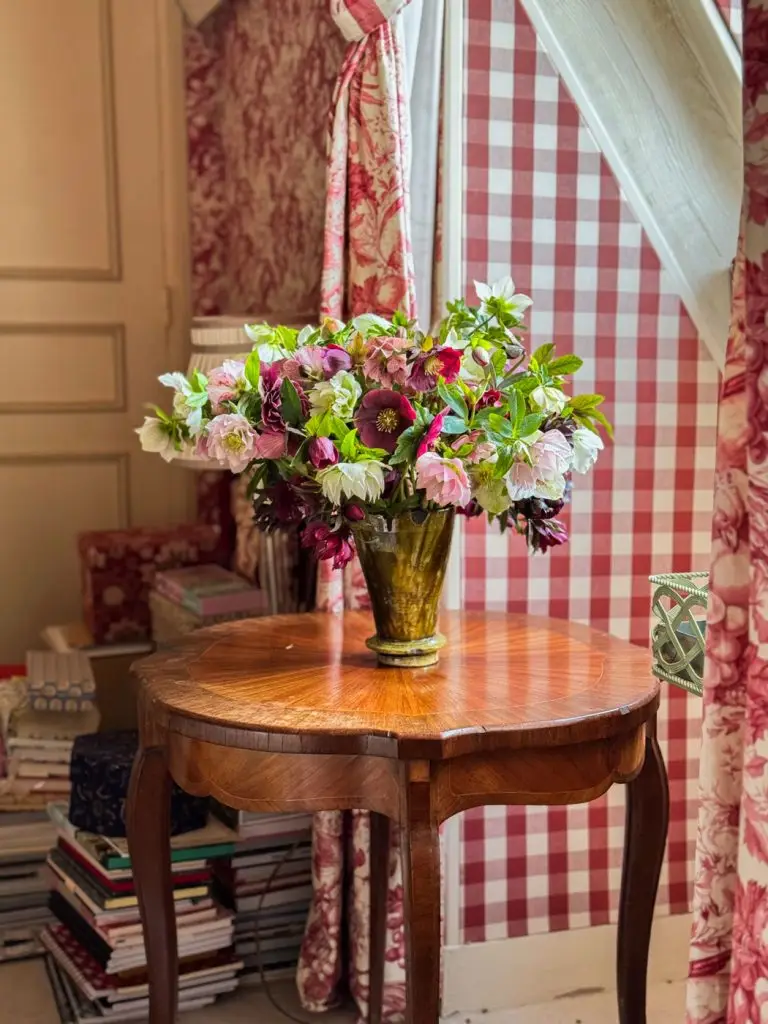
Hellebores are, in a way, the tulips of winter. Each year, I watch for the first flowers to appear in the garden, especially those we planted in the beds in front of the kitchen so that we can observe, without even having to step outside, the very first signs of the new year. It is a real pleasure to enjoy a warm cup of coffee and see these clusters of flowers in different tones gently awakening the garden.
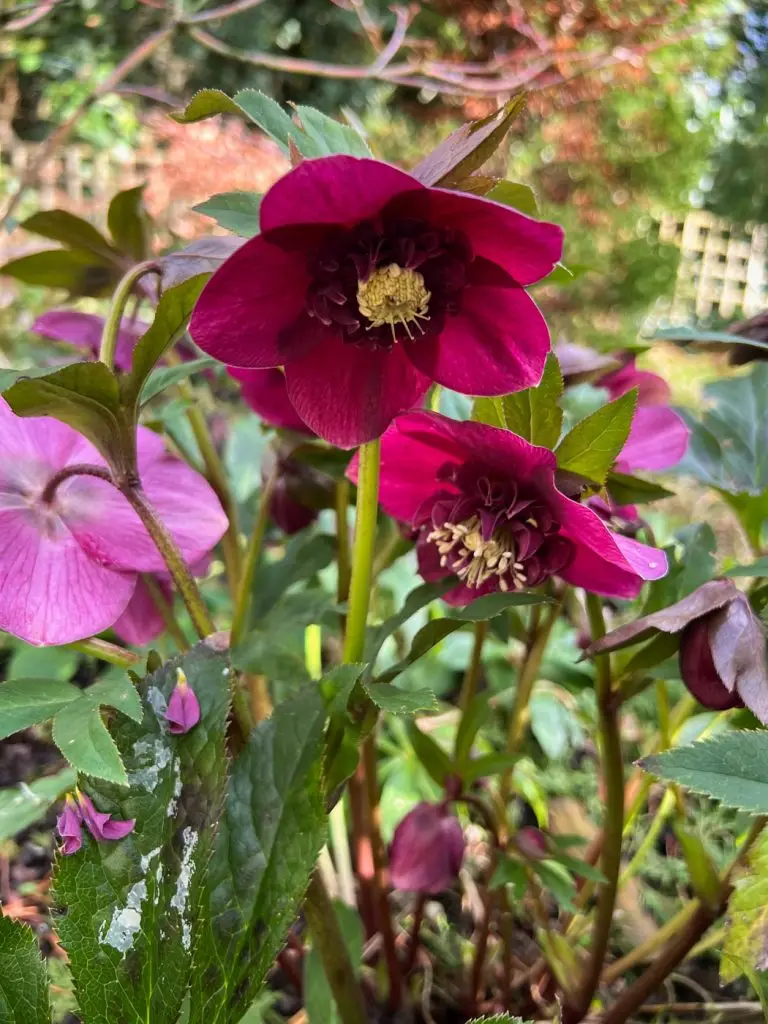
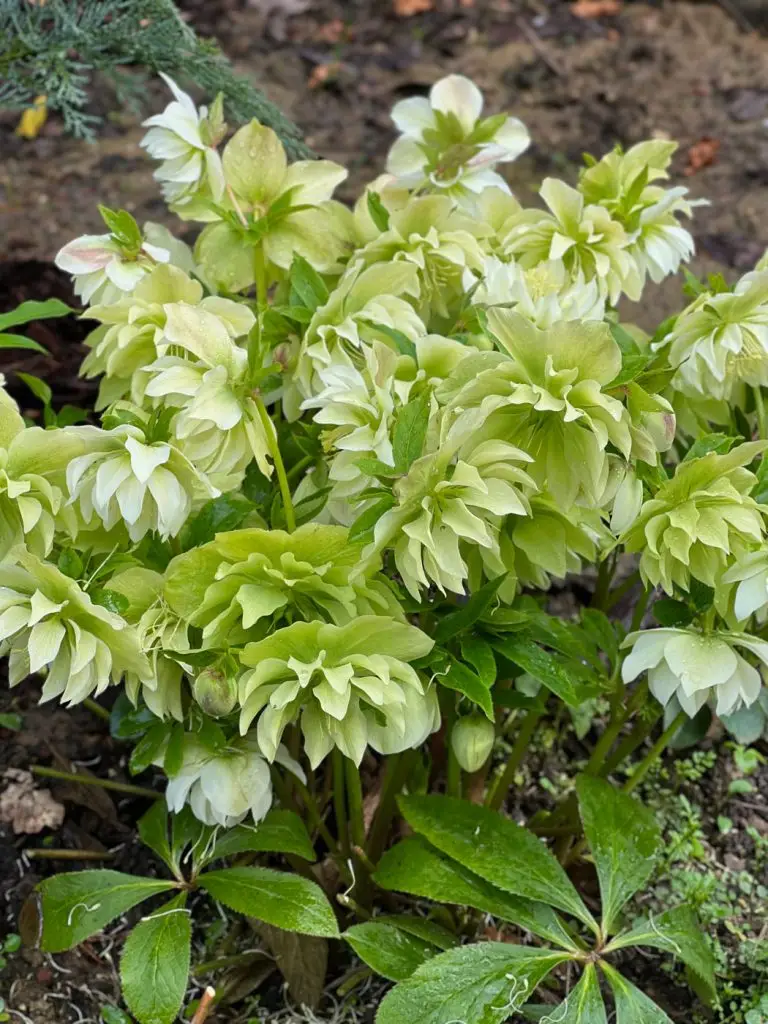
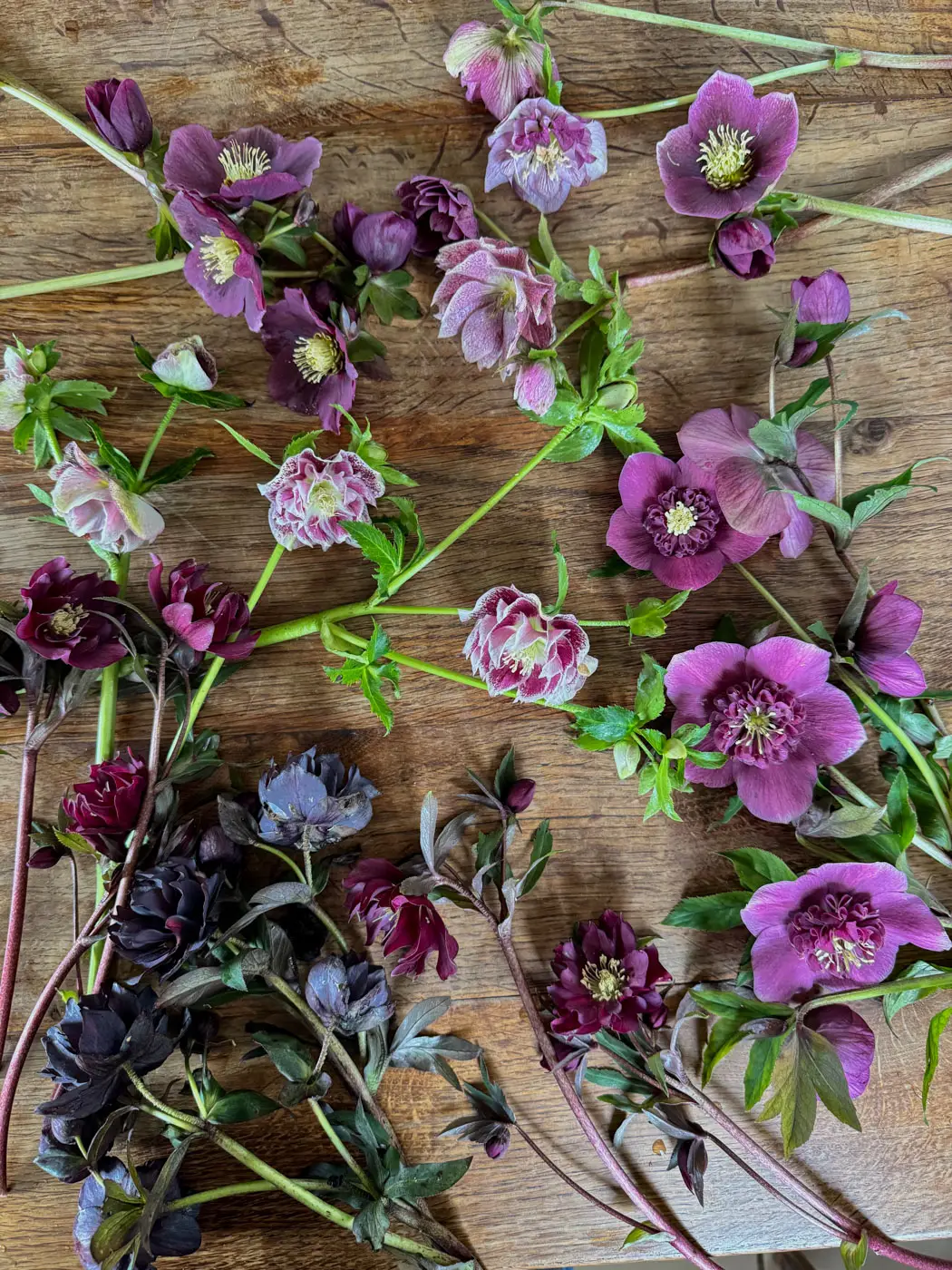
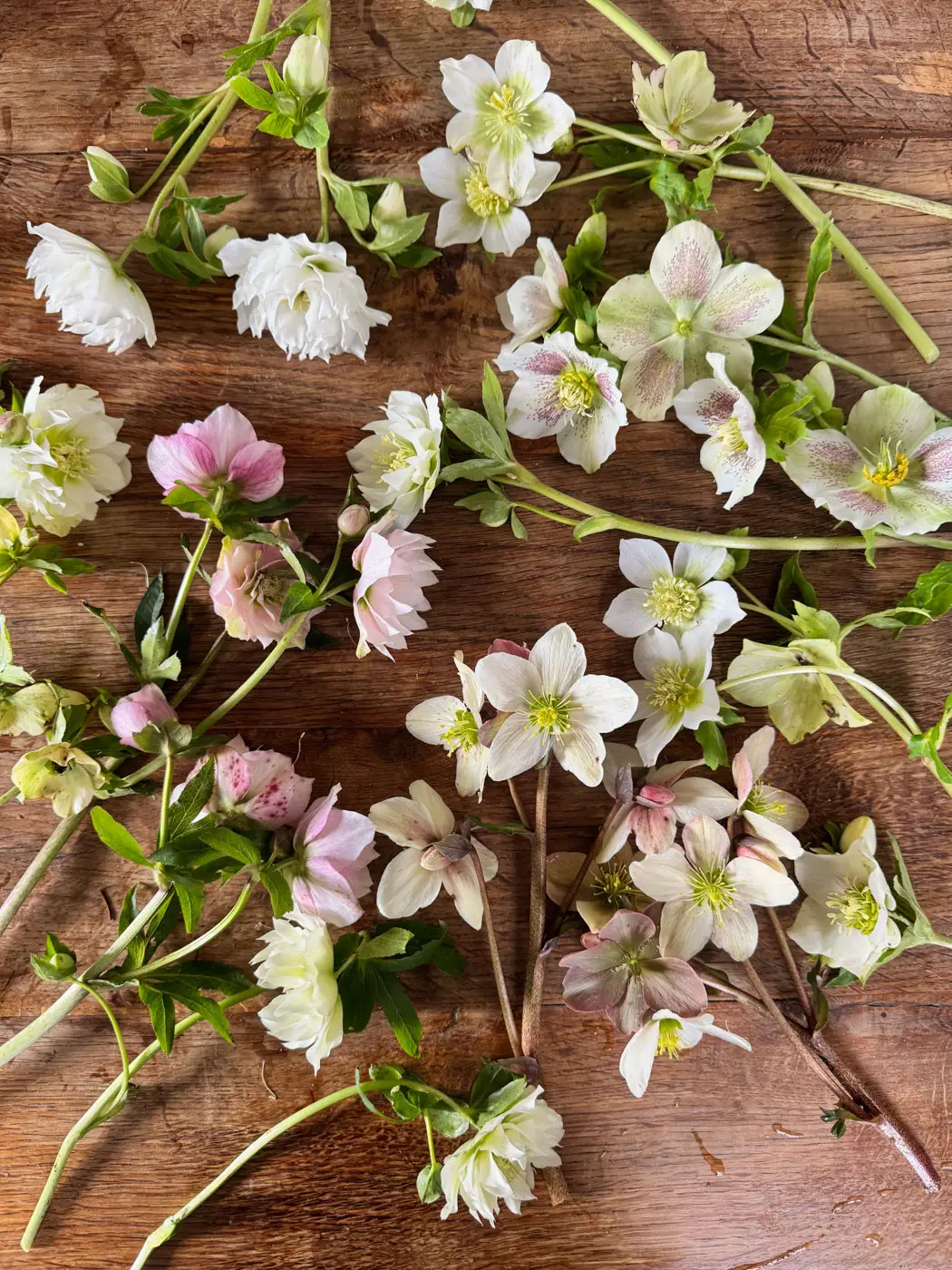
Hellebores in general (not to mention hellebore bouquets) are still not fully appreciated as they should be, even though, in my opinion, they are among the most interesting plants of the season. Their palette is not spectacular in the traditional sense of the word (i.e. no bright, vivid colours like tulips or dahlias), but the nuances are incredibly rich: pure white, cream, ivory, soft green, pale yellow, powder pink, mauve, deep violet, burgundy, garnet almost black. Elegant shades, easy to combine, that enhance a winter garden by bringing it back to life.
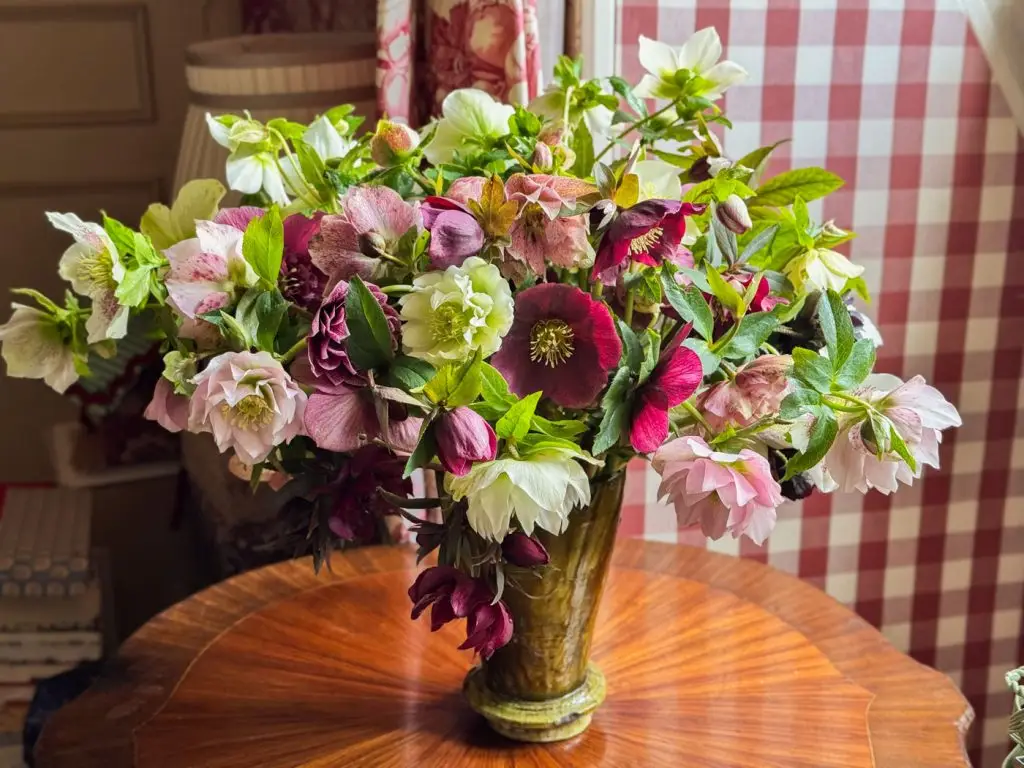
The diversity of shapes is just as remarkable: single or double flowers, sometimes speckled, sometimes in subtle tonal gradations. Some heads remain gently inclined, others open more fully, revealing their richness. They have a particular presence in the garden, a grace and delicacy that daffodils (more rustic and more common) simply do not possess. For several weeks, hellebores have the pleasure and the privilege of being the true masters of the garden.
They also pair beautifully with snowdrops, another favourite flower of the season.
The blooming of daffodils, at almost the same time or slightly later, truly allows us to appreciate the gradual transition from one season to the next.
Beyond their beauty, hellebores are also excellent ground cover plants. Their evergreen foliage structures the beds throughout the year. Year after year, they carpet the soil, bringing a density that prevents weeds from taking hold. Even when they are not in bloom, they remain interesting, and I can only encourage you to plant them.
If we grow so many, it is also to enjoy them in bouquets (to decorate a table in light or darker tones, for example) inside the house. We do not opt for complex arrangements combining various flowers as we might in spring, summer or autumn. I prefer simple compositions made exclusively of hellebores, medium or small, playing with shapes and colours. A few branches can be added, rising above the bouquet, to bring structure and a touch of poetry.
What you need
- Pot/vase
- Pruning shears
- Hellebores Double Ellen White / Pink / Green
- Hellebores Christmas Carol
- Hellebores Double Green Spotted
- Hellebores Red Spotted
- Hellebores Harvington Double Pink
- Hellebores Double Ellen Picotee
- Hellebores Red Lady
- Hellebores Anna’s Red
- Hellebores Anemone Red
- Hellebores d’Orient Black
- Hellebores Emma
Step 1
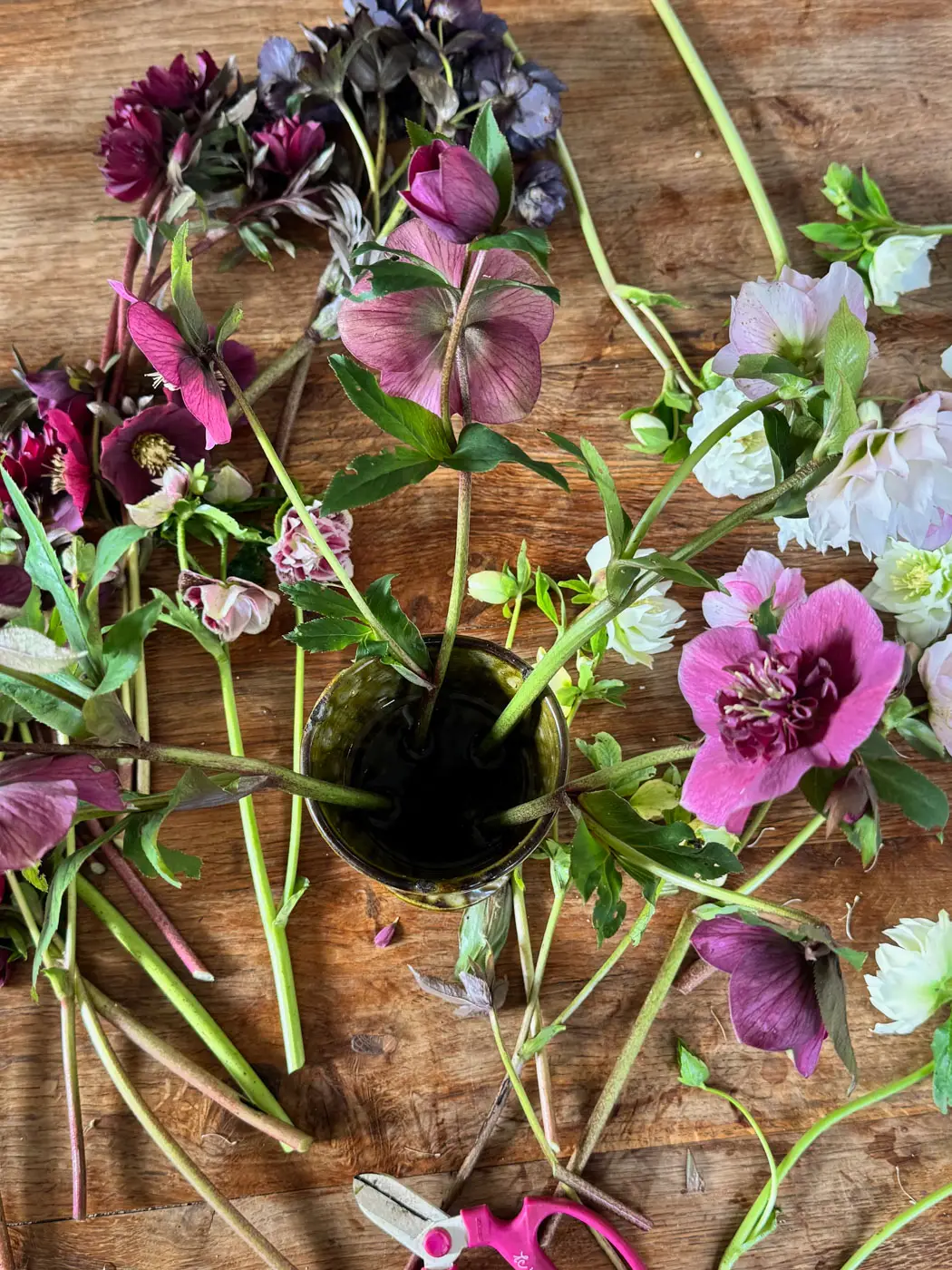
I begin by selecting the longest and strongest stems.
I carefully remove the foliage from the lower part of the stems so that no leaves sit in the water.
I then trim the stems slightly at an angle: this encourages better water absorption and prolongs the life of the bouquet.
I place these first stems along the edges of the vase, previously filled with water: they form the basic structure of the bouquet.
Step 2
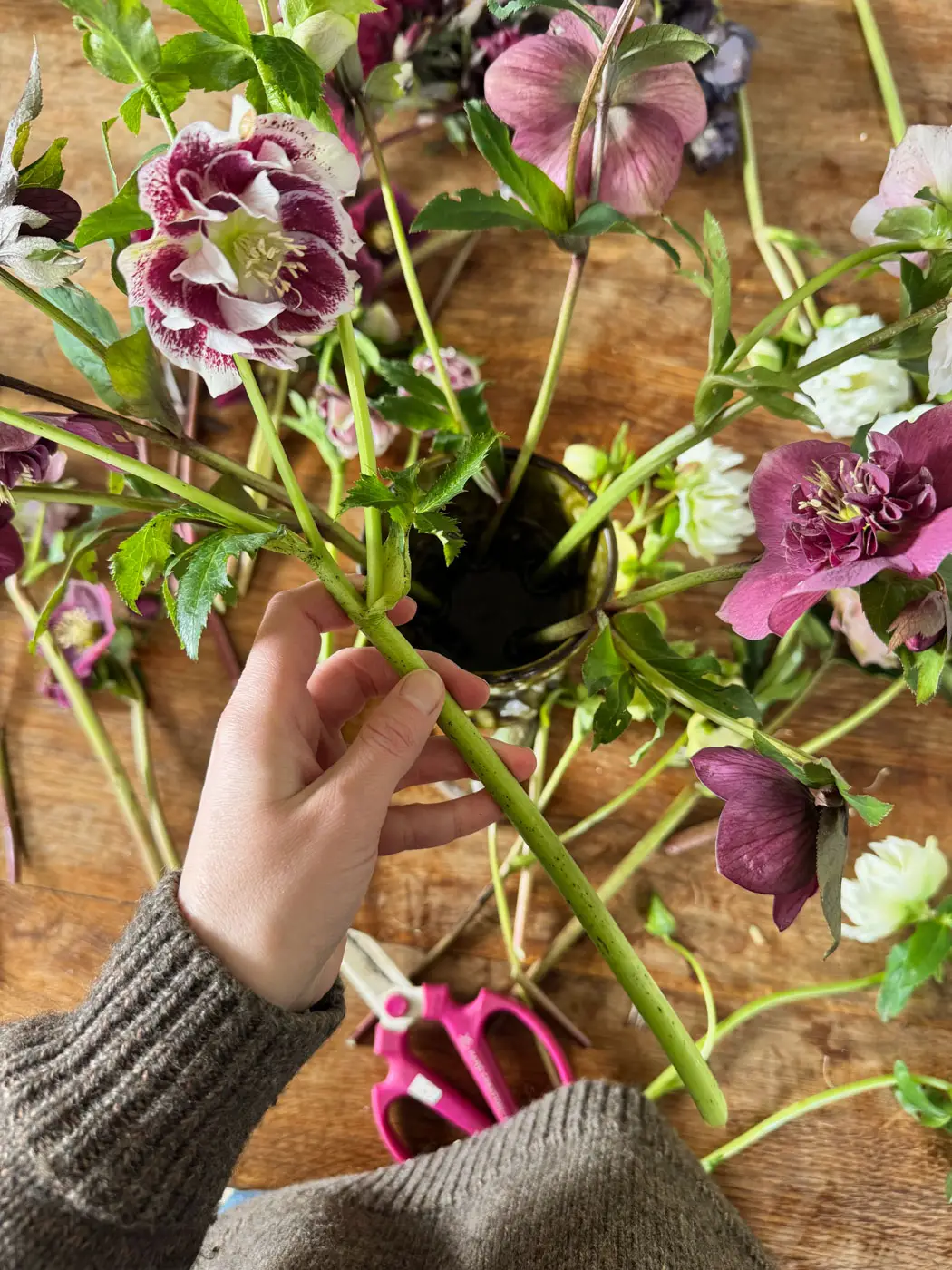
I continue by choosing different forms of hellebores, in deep shades of violet and burgundy.
As in the previous step, I first select the thicker stems to reinforce the structure.
Step 3
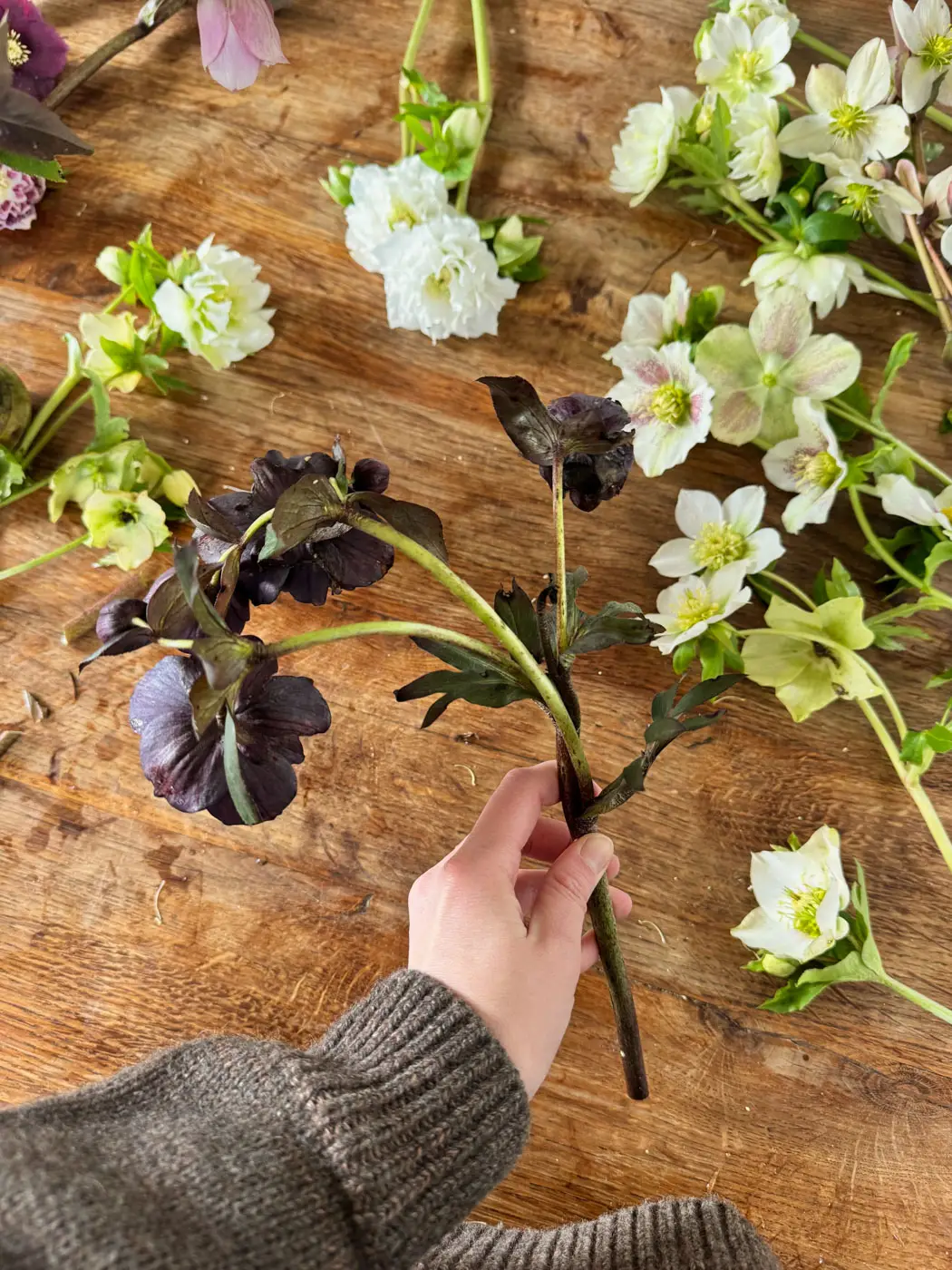
Some varieties naturally have a trailing habit: I place them against the rim of the vase to create a soft, elegant movement.
I like to incorporate black or very dark hellebores to bring a graphic, assertive touch.
They can also be placed at the centre of the bouquet: the trailing effect will then be softened, supported by the other flowers.
Step 4
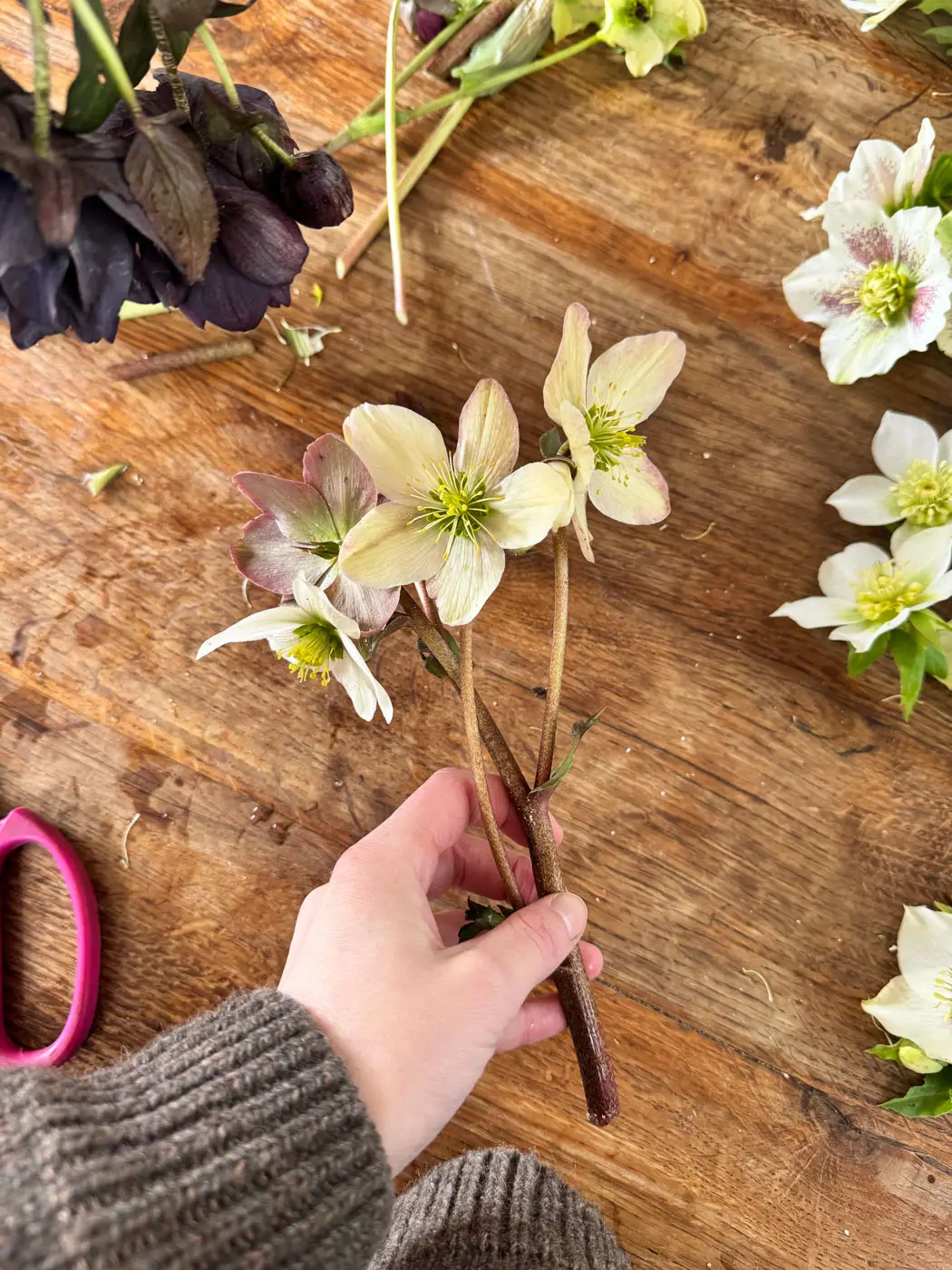
To finish, I add lighter tones: ivory, soft green tending towards yellow, white…
These colours bring brightness and create beautiful contrasts with the deeper shades.
We source our plants directly from a passionate grower in the north of France, Les Vivaces de Thierry et Sandrine, whom you can find at certain plant fairs. Their hellebore collection is beautiful and quite extensive, and they also offer rare varieties of snowdrops. I can only recommend buying from them (I generally avoid garden centres). Hellebores more than deserve their place in the garden.
One important point to mention as well: hellebores are toxic, so be sure to wash your hands thoroughly after handling them and keep them out of reach of children and animals.