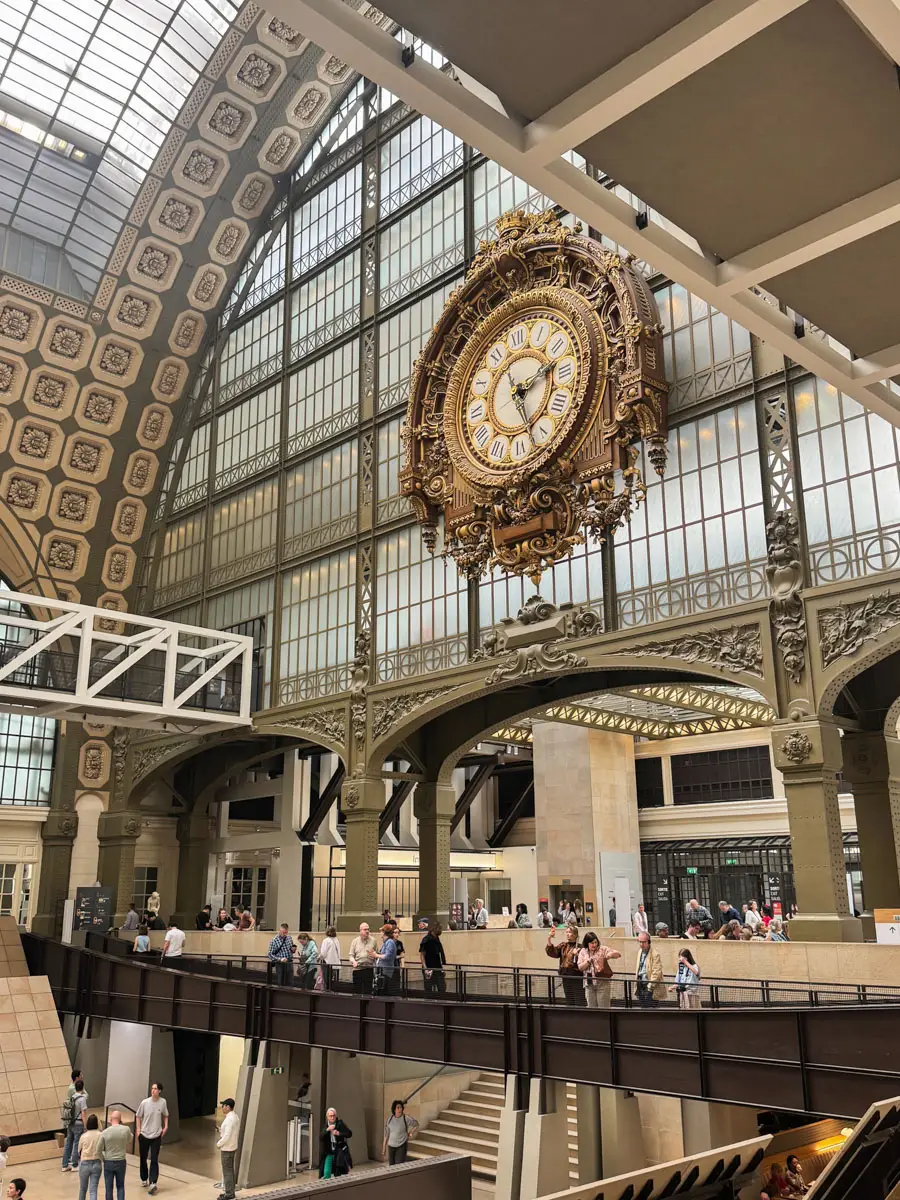
The exhibition Renoir and Love • A Joyful Modernity is currently on view at the Musée d’Orsay in Paris. I strongly encourage you to go and experience this particular, truly special event, where works by the painter from all over the world have been brought together for us to enjoy. It is a privilege, a real pleasure, to discover this exhibition.
It shows how Renoir took part in the birth of modernity (between 1865 and 1885), gradually moving away from academic codes to invent a form of painting rooted in contemporary life, influenced by Courbet and Manet.
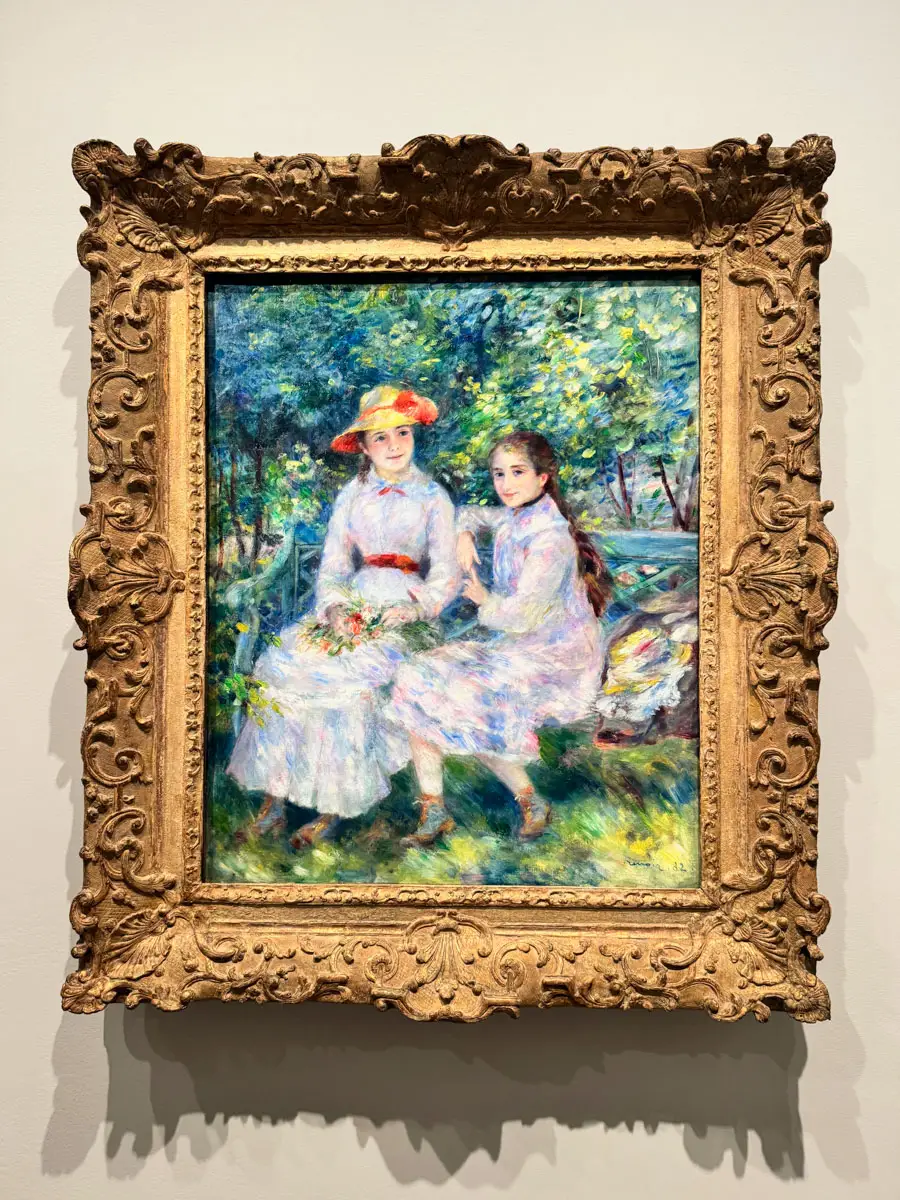
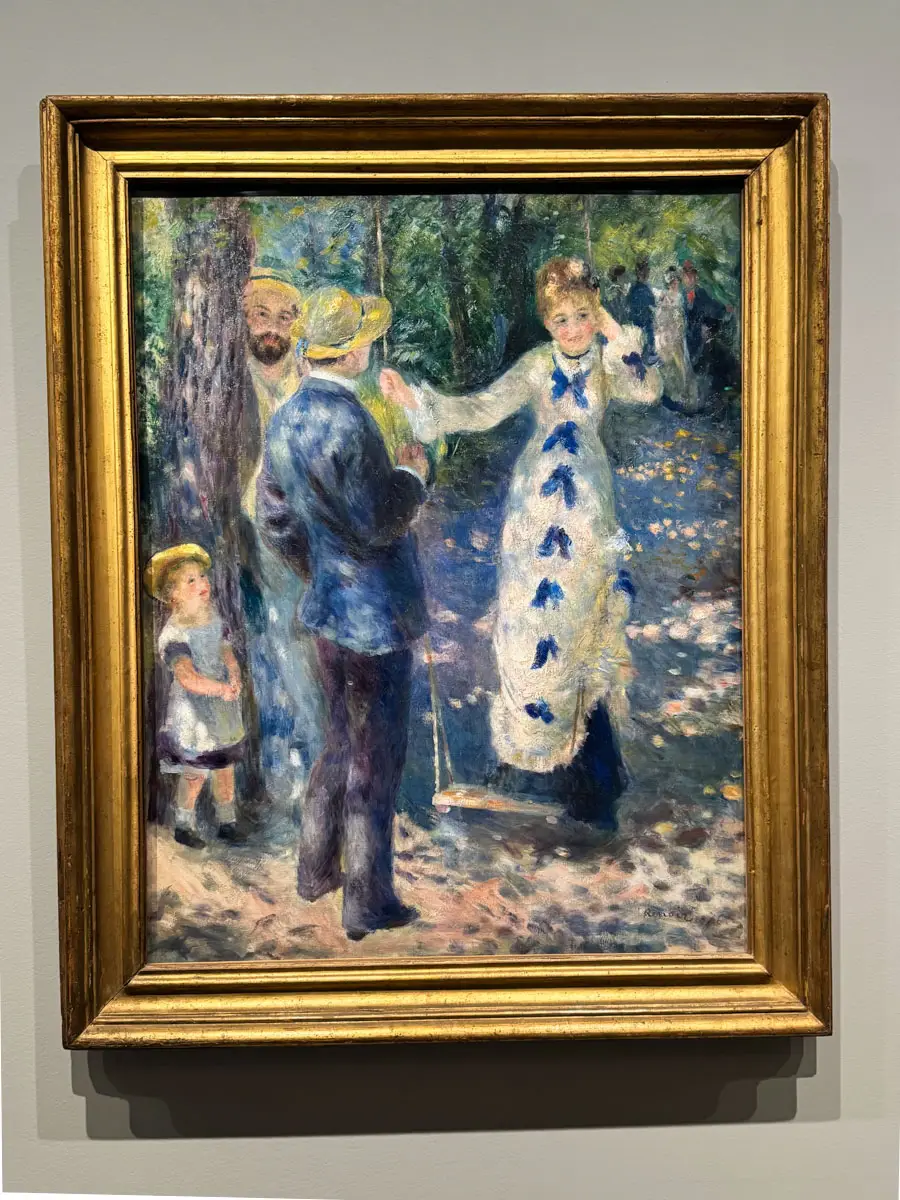
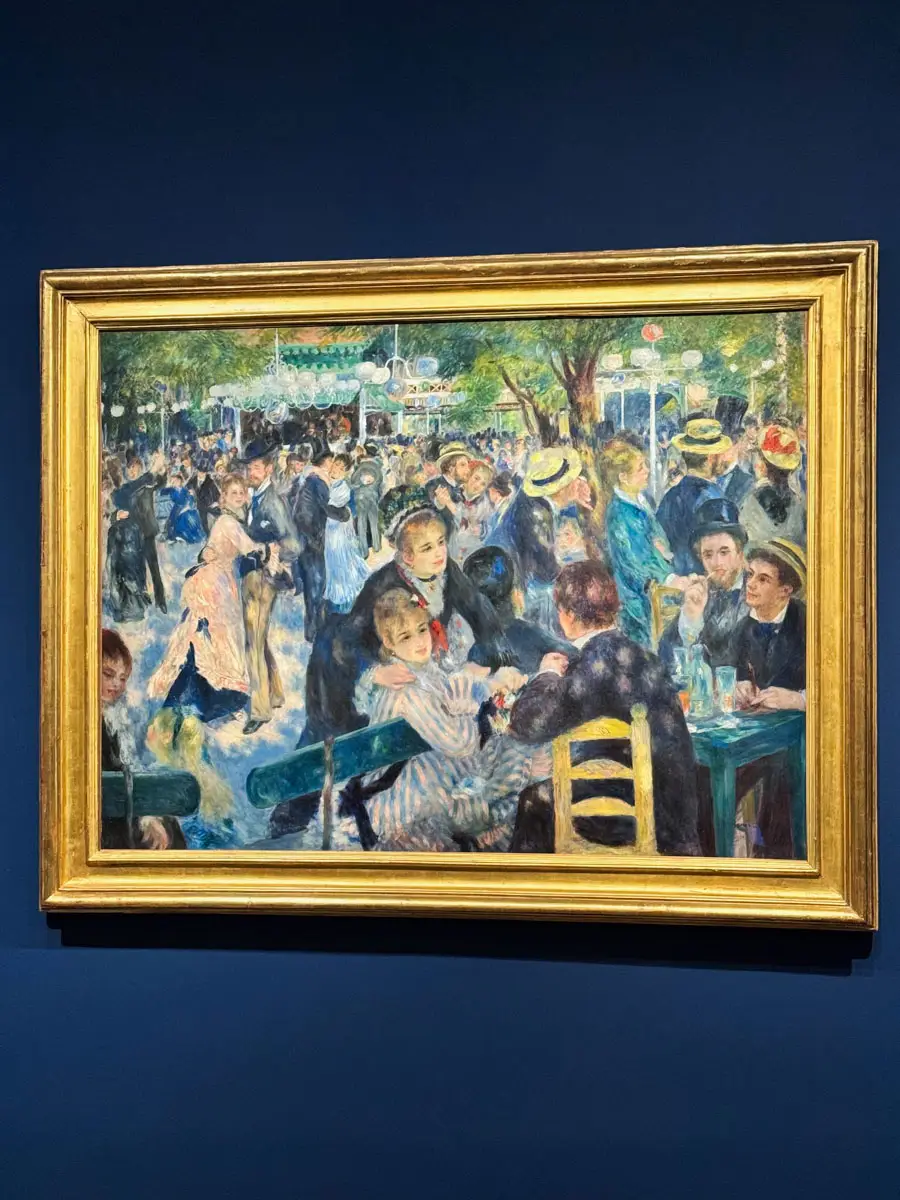
Renoir chose to paint everyday life: his friends, the places he frequented, popular leisure activities. He was especially interested in human relationships, in friendship and love, which he conveyed with great poetry. A significant part of his inspiration came from bohemian life scenes, shared meals among friends, or even crowds, often set outdoors, in gardens or festive places.
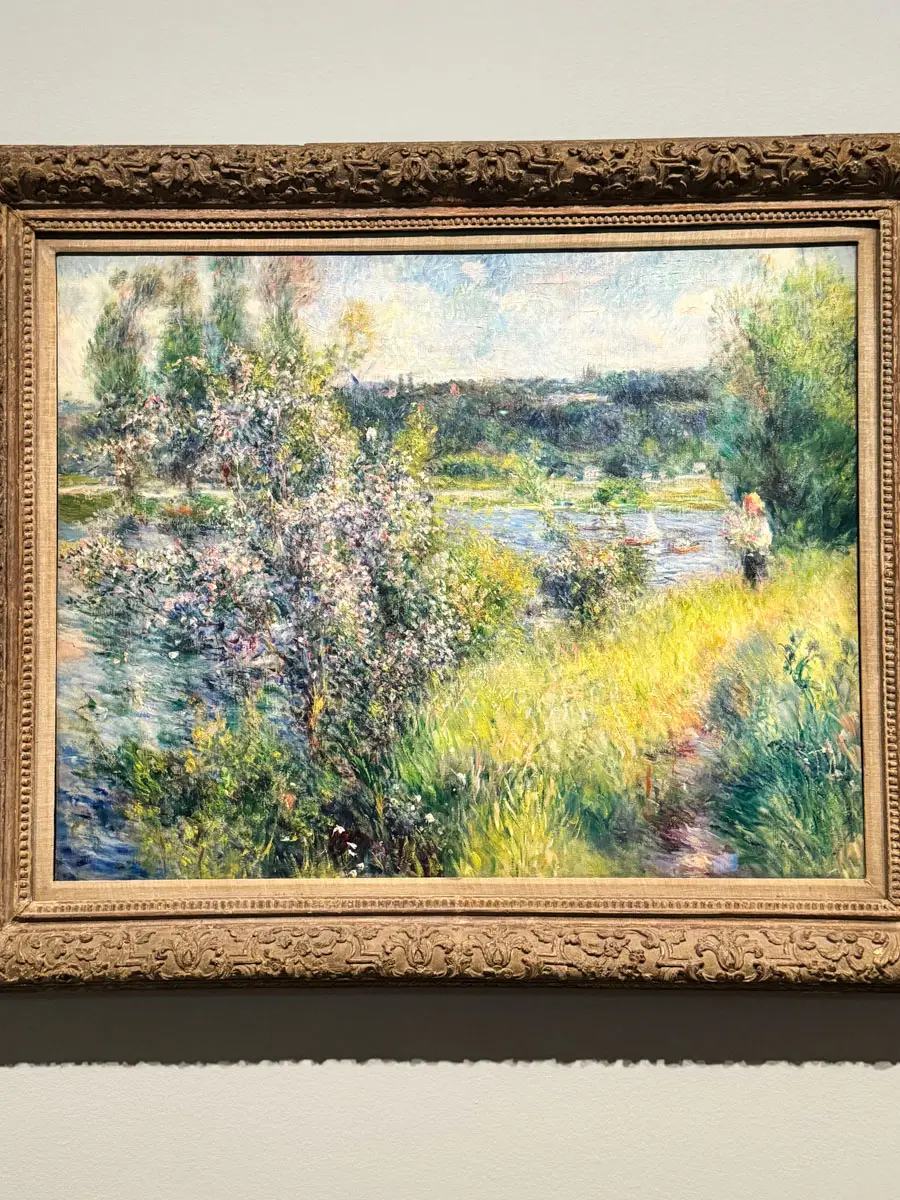
His style is marked by vibrant (yet never garish) colors and a particular attention to light, which he mastered with great accuracy. He sought not only to tell a story, to capture a moment in life, but also to convey an atmosphere. There is a kind of gentle way of living in his work, almost bucolic, he knew how to capture moments of happiness, the beauty of ordinary pleasures. As an amateur gardener, I find these paintings a great source of inspiration: a pear tree, an apple tree in bloom, a blue bench inspired by a trellis…
The banks of the Seine play a central role in his work, particularly around Chatou, west of Paris. This place became a true anchor point for his painting. The Fournaise restaurant (which still exists today), frequented by artists and boating enthusiasts, provided him with an ideal setting to depict scenes of life in this pastoral atmosphere. Renoir observed modern leisure there: lunches, boat rides, moments of relaxation by the water.
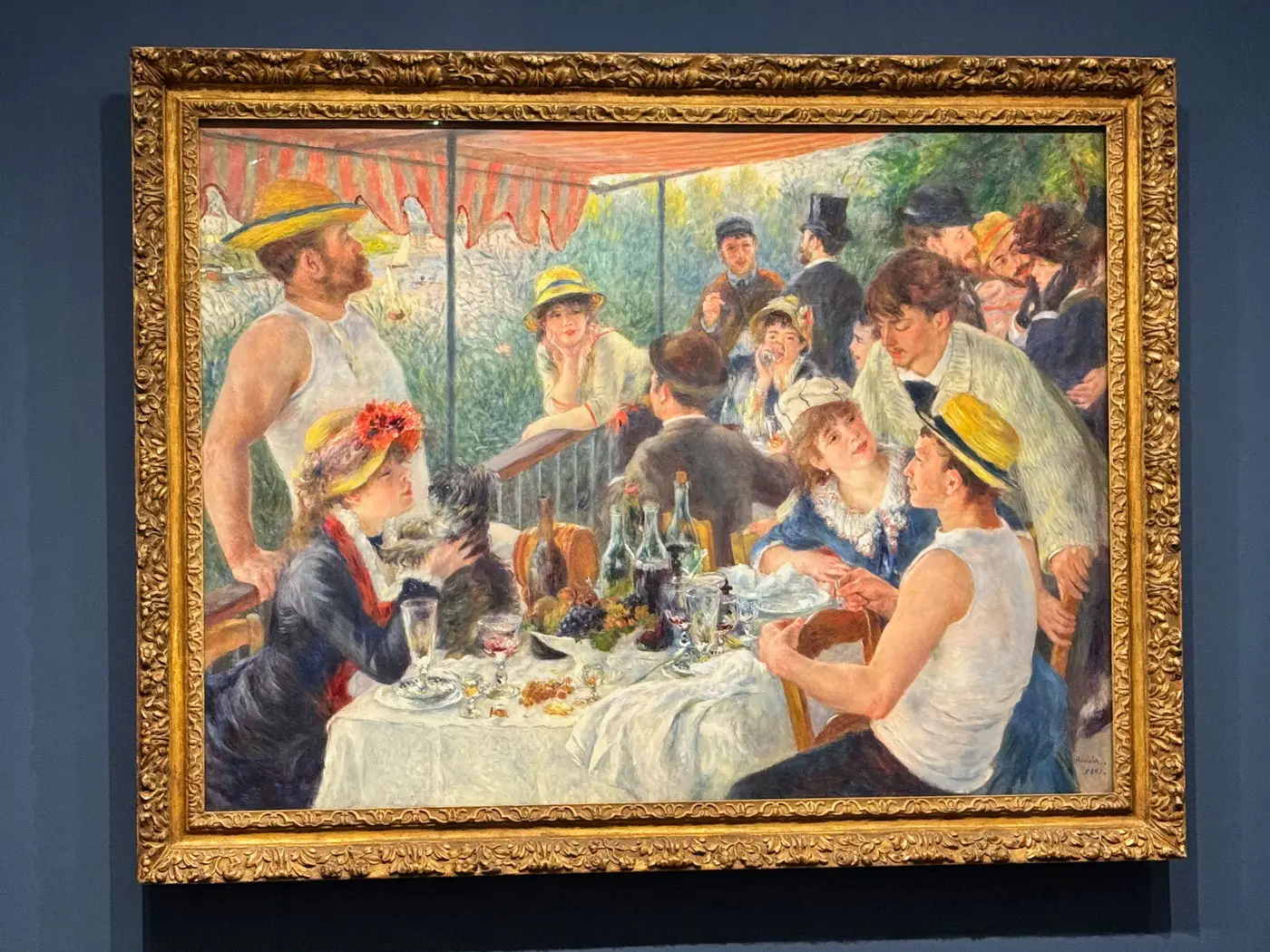
Luncheon of the Boating Party is undoubtedly the most accomplished example of this period. He brings together friends, models and acquaintances in a composition where everything feels natural, where one can almost hear conversations and laughter, as if we were observing these people ourselves. The setting of Chatou and the Maison Fournaise is not incidental: it is a place where social classes mix, where relationships are freer, and where Renoir found this famous “joyful modernity.”
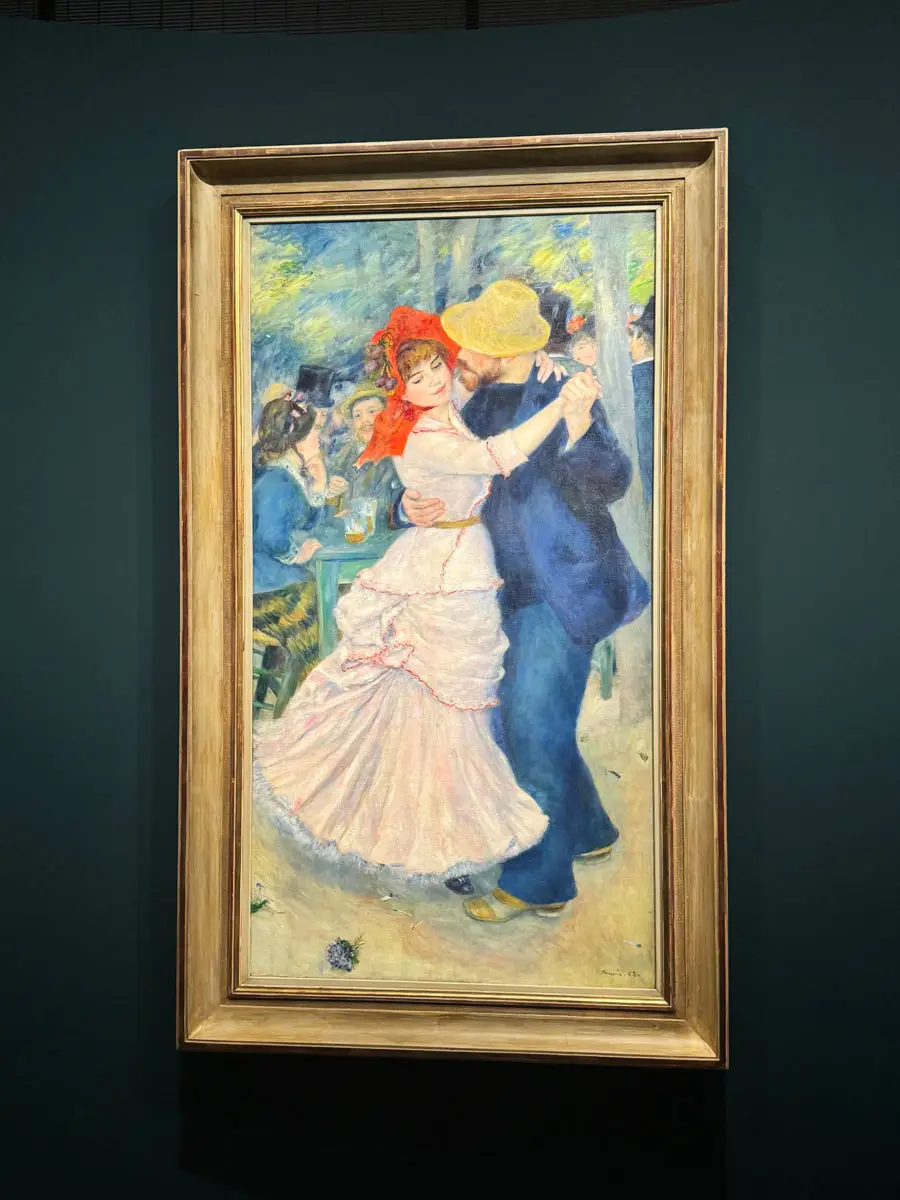
The painting Dance at Bougival resonates particularly with me, as I first discovered it many years ago at the Museum of Fine Arts in Boston, where I was living at the time (a city that has remained very dear to me), and where it is usually exhibited. Seeing it again in front of me in Paris gave me a small pang in the heart, and brought many beautiful memories back to the surface…
To return to the master, beyond his undeniable talent, Renoir also benefited from the support of those close to him, notably Gustave Caillebotte, who, in addition to being a painter himself, was also a collector and patron of Impressionist artists. This friend bought several of his works at a time when Renoir was still struggling to make a living from his art. This financial and moral support played a concrete role in allowing him to continue his work, and in his recognition and reputation.
The exhibition reveals an artist who is not only a painter of light, but also a careful observer of his time. Through scenes of leisure, the landscapes of Chatou, or friendly gatherings at the Maison Fournaise, Renoir conveys a peaceful vision of the world, where modernity lies in the simple pleasure of being together.
At the Musée d’Orsay, from March 17 to July 19, 2026. Booking recommended.