Visit to the Domaine of Chaalis

visite abbaye royale chaalis-047

When the start of the year begins to feel a little too dreary, there’s nothing quite like planning a little outing to beat the seasonal gloom. This quieter period offers the perfect chance to enjoy historic sites in peace—after the Christmas tourists have left and local visitors are busy with their routines.

That’s how I found myself peacefully wandering, almost alone from room to room, through the beautiful Domaine and Royal Abbey of Chaalis, not far from Paris.

visite abbaye royale chaalis-028
visite abbaye royale chaalis-037

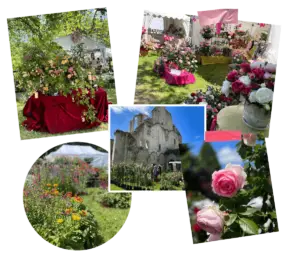
The estate hosts the annual Rose Days, a charming flower festival I love attending for its delightfully pastoral atmosphere. It’s the perfect occasion to pick up lovely hats adorned with beautiful blooms—each one makes me feel a bit like Anne Shirley. What’s funny is that, oddly enough, I’ve never actually taken the time to visit the main house, since the nursery stands and other festival displays are all set up in the park and the orangery.

It was actually after a recent visit to the Jacquemart-André Museum in Paris that I felt inspired to finally discover the full extent of the Chaalis estate, which was acquired by Nélie Jacquemart-André after her husband’s death.

The decor of the main house comes as no surprise—Nélie and her husband were renowned art collectors with a deep appreciation for paintings, sculptures, and fine fabrics, all of which they brought into their homes. As a portraitist herself, Nélie’s passion for painting is evident in the many rooms of the estate, which she acquired in 1902 and kept until her death, eventually bequeathing it to the Institut de France.

visite abbaye royale chaalis-064
visite abbaye royale chaalis-074

The Domaine de Chaalis is steeped in history—it was originally a Cistercian abbey (a reformed branch of the Benedictines) built in 1137. Only the ruins of the abbey church remain today, but they still convey its former grandeur. Several bishops of Senlis are even buried there, a testament to the site’s importance in its time. Not far from the main house stands the beautifully restored Sainte-Marie Chapel, built in the 13th century during the reign of Saint Louis.

It’s a little gem that’s absolutely worth visiting if you get the chance. My first impression was that it felt like a miniature version of the Sainte-Chapelle in Paris—the stained-glass windows are just as breathtaking. It’s also where Nélie Jacquemart-André is buried. The chapel features Renaissance frescoes of the Annunciation by Primaticcio, and you can sense a strong Italian influence throughout the estate—especially in the stunning crenellated wall surrounding the rose garden, designed by the Italian architect Sebastiano Serlio.

visite abbaye royale chaalis-052

The rose garden doesn’t hold much interest in this season, though some perennials have been planted to keep the garden pleasant year-round. It’s truly at its best in May and June, when it blooms in all its glory.

The entire estate is imbued with a romantic atmosphere, especially once you step into the main residence, which was built in the 18th century to house the monks.

Some rooms—particularly upstairs—feel quite different from what you’d expect in a residence from that period. The monks’ hall, which was originally the kitchen, is especially striking with its towering fireplace, topped with a life-sized stag. One imagines it must have taken an entire tree trunk to heat the room back then! Today, it displays a collection of medieval and Renaissance objects.

On the ground floor, a series of elegant reception rooms opens onto a beautiful bust gallery. The natural light this time of year gave it a particularly enchanting glow.

visite abbaye royale chaalis-087
visite abbaye royale chaalis-096

As I mentioned earlier, another rather surprising feature upstairs is the row of guest bedrooms—former monks’ cells, now repurposed along the portrait gallery. Their layout and symmetry are quite unusual. Decor-wise, these rooms don’t hold much interest if you’re looking for inspiration. But I did fall in love with the music room—a serene, sunlit space richly decorated in soft golds and beiges, with floral and striped silk fabrics. It’s slightly tucked away, elegant and welcoming, with a prime view of the abbey ruins. You could happily spend an entire day there.

visite abbaye royale chaalis-115

I believe Nélie Jacquemart-André’s private apartments are located nearby, though they’re only accessible on guided tours—a bit of a shame. Finally, the portrait gallery extending from the music room is one of the estate’s most iconic rooms, much like the bust gallery. It features an impressive collection of paintings, sculptures, and furniture, and is punctuated with charming interior oculi—an original touch. The gallery is nearly as long as the Hall of Mirrors at Versailles. The combination of blue shades on the walls and trim gives the room the cozy feel of an English country house. As someone who loves bold interior colors, I was delighted! I even wished I’d brought my Farrow & Ball or Little Greene color charts with me.

As you stroll through the estate, you’ll come across a lovely orangery used for events and receptions, and several other outbuildings that, with a little renovation, would make perfect cafés, tearooms, or charming boutiques—much like those you’d find across the Channel.

If you’d like to experience this beautiful estate during the Journées de la Rose, take a look at this article. And if you’re thinking of visiting, you can find all the information you need on their website.

visite abbaye royale chaalis-035

Partagez cet article